
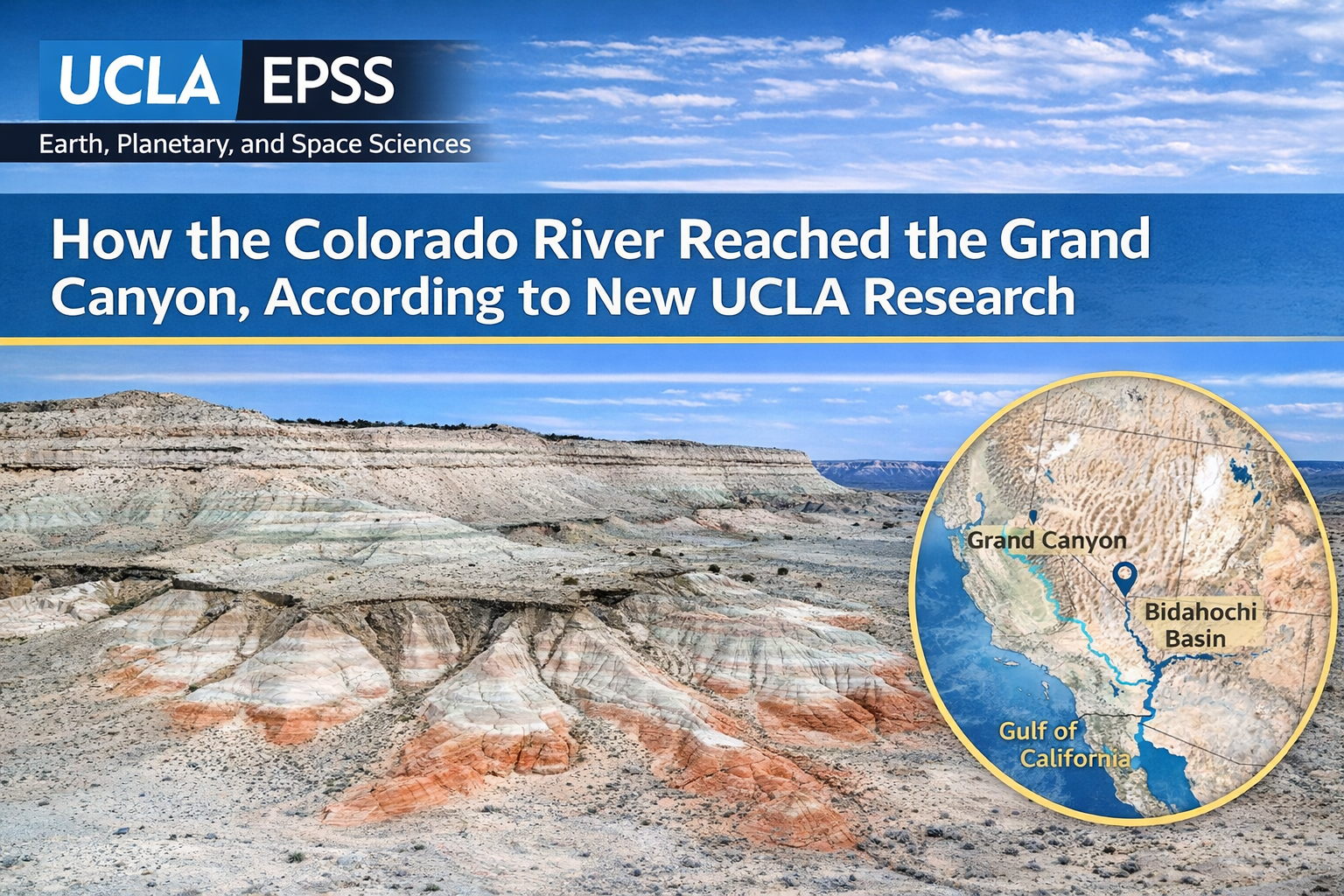
New research led by UCLA scientists has uncovered important details about how the Colorado River made its way to the Grand Canyon, solving a long-standing geological mystery.
The Colorado River existed in western Colorado about 11 million years ago and first exited the Grand Canyon around 5.6 million years ago. However, how it traveled between those two points remained unclear for millions of years.
According to a new study published in Science, the river likely pooled in a large upstream lake east of the Grand Canyon, in what is now part of the Navajo Nation. Over time, the river carved a downstream path that eventually connected to the Gulf of California.
This transition marked a major turning point, transforming the Colorado River into a continental-scale river system that connected ecosystems across the region.
“In some ways, you could really think of it as the birth of the Colorado River that we know today,” said UCLA geologist John He.
The study, based on sandstone analysis and fossil evidence, suggests that this transformation played a key role in shaping ecosystems throughout the Colorado River basin.
Source: UCLA Newsroom