New Seismic Measurements from Mars Suggest New Ideas about Planet’s Formation



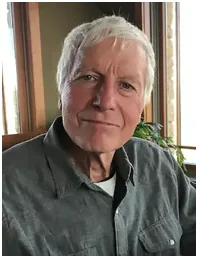
Arthur Montana, professor emeritus of Earth, Planetary, and Space Sciences at UCLA, passed away on August 8, 2025, at the age of 90.
Born in Montana, Montana earned his Ph.D. in geology from Penn State University, where he later served as a junior faculty member before joining UCLA in 1976. His early postdoctoral work with Peter Wyllie at the University of Chicago helped shape his lifelong interest in the deep processes that drive Earth’s evolution.
At UCLA, Montana became a central figure in experimental petrology, advancing the study of igneous and metamorphic processes. Working with students and postdoctoral researchers, he developed and refined tools that remain widely used to estimate the pressures and temperatures recorded in ancient rocks.
His experiments revealed how water and other volatiles influence the melting of Earth’s mantle and the crystallization of magmas—insights that helped define the field’s modern foundations.
As department chair from 1987 to 1991, Montana led a period of renewal. He worked tirelessly to rebuild the geochemistry program after several key departures. Many of the researchers he recruited, such as Mary Reid, Jon Davidson, Mark Harrison, Kevin McKeegan, and Craig Manning became core faculty and paved the way for a new generation of growth and discovery in the department.
“Art was a fierce advocate for the department. He was persistent, direct, and completely committed to seeing it thrive,” said Manning. But he was more than just an advocate, he truly walked the walk. When Manning came to him with concerns about the costs of establishing his own experimental lab, Montana went above and beyond. “He told me on the spot that I could have his lab. This is simply not something you see every day in a university setting, where space is at a premium and often carefully guarded. That selflessness and dedication to the department is something I took with me ever since.”
Prior to joining UCLA and living in upstate New York, Mark Harrison was exposed to Montana’s famously persuasive style. “He called my wife every Monday morning that winter,” Harrison said, “ostensibly to check in on our decision to come to Los Angeles, but always noting that it was currently 72 degrees in Santa Monica.” Those who worked with him knew that behind his humor and persistence was an unshakable commitment to his colleagues and students.
After his retirement in 1992, Montana moved to New Mexico, where he devoted himself to animal rescue and helped modernize the state’s mine reclamation policies. He later lived in the Wisconsin Driftless Area, Colorado, and Northern California, continuing to explore the landscapes that had always inspired him.
An avid outdoorsman and long-distance runner, Montana founded a departmental running group that was famous for returning hours later than expected after venturing deep into the canyons north of campus. The same curiosity and endurance that drove those runs also characterized his science—restless, methodical, and always chasing the next question.
Arthur Montana will be remembered as a pioneering experimentalist, a devoted mentor, and a leader whose generosity of spirit helped shape generations of UCLA geoscientists. His legacy endures in the laboratories he built, the scientists he inspired, and the community he helped strengthen.
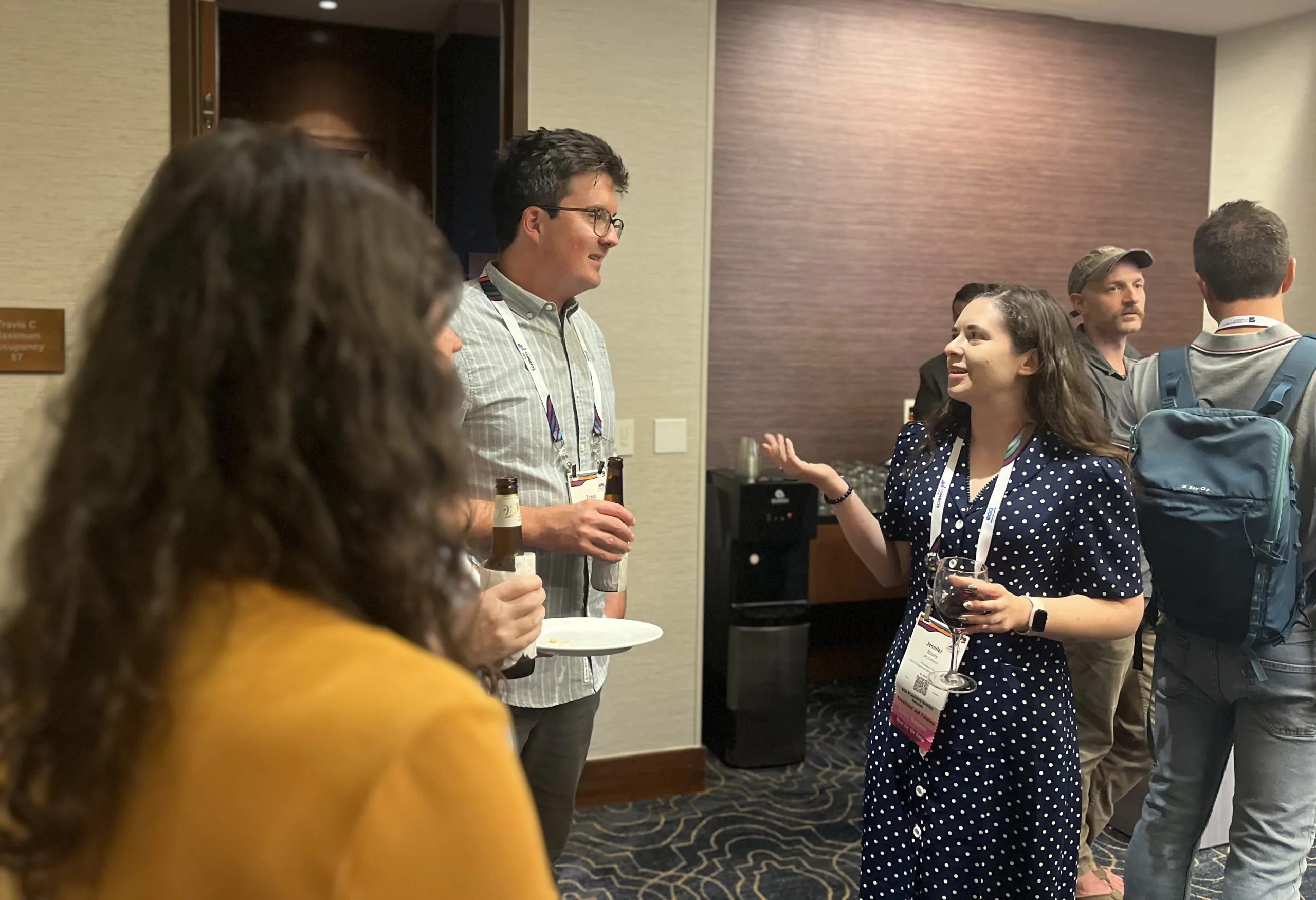
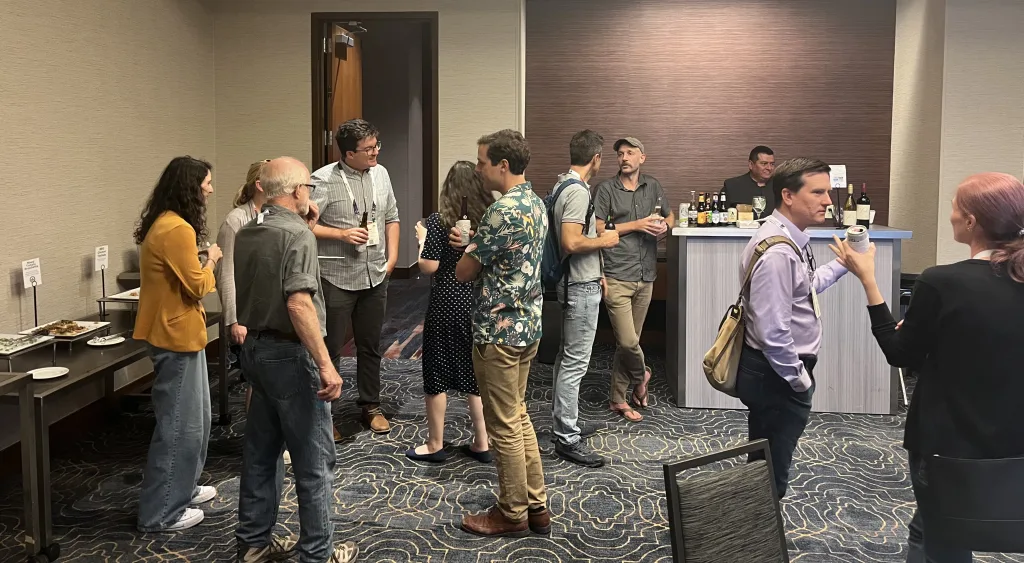
EPSS sponsored a spirited reception during the Geological Society of America (GSA) meeting in San Antonio, the first UCLA reception at GSA in decades, showcasing the strength and resilience of the department. Hosted by Assistant Professor John He, who recently joined UCLA in 2024, the event brought together generations of Bruins to celebrate their shared roots in geology and field science. Current and emeritus professors, graduate students, post-docs, and alumni, including a past GSA President, GSA fellows, professionals, and researchers scattered across the country, all came together throughout the evening and swapped stories about their time at UCLA. They shared updates from their professional paths, and reflected on the lasting influence of their time at UCLA. Many remembered the late Professor An Yin, whose spirit of determination and curiosity still resonates across the program. Professor Yin would always say, ‘Just do it,’ and that’s exactly what we’re doing: building a new global tectonics and geoscience research program and training the next generation of field geologists. The event underscored a key message: the continued engagement and advocacy from alumni, friends, and partners who believe in the department’s mission is ensuring that the legacy of UCLA geoscience remains dynamic and strong. With renewed energy and a shared vision for the future, EPSS continues to strengthen its place at the forefront of Earth science.
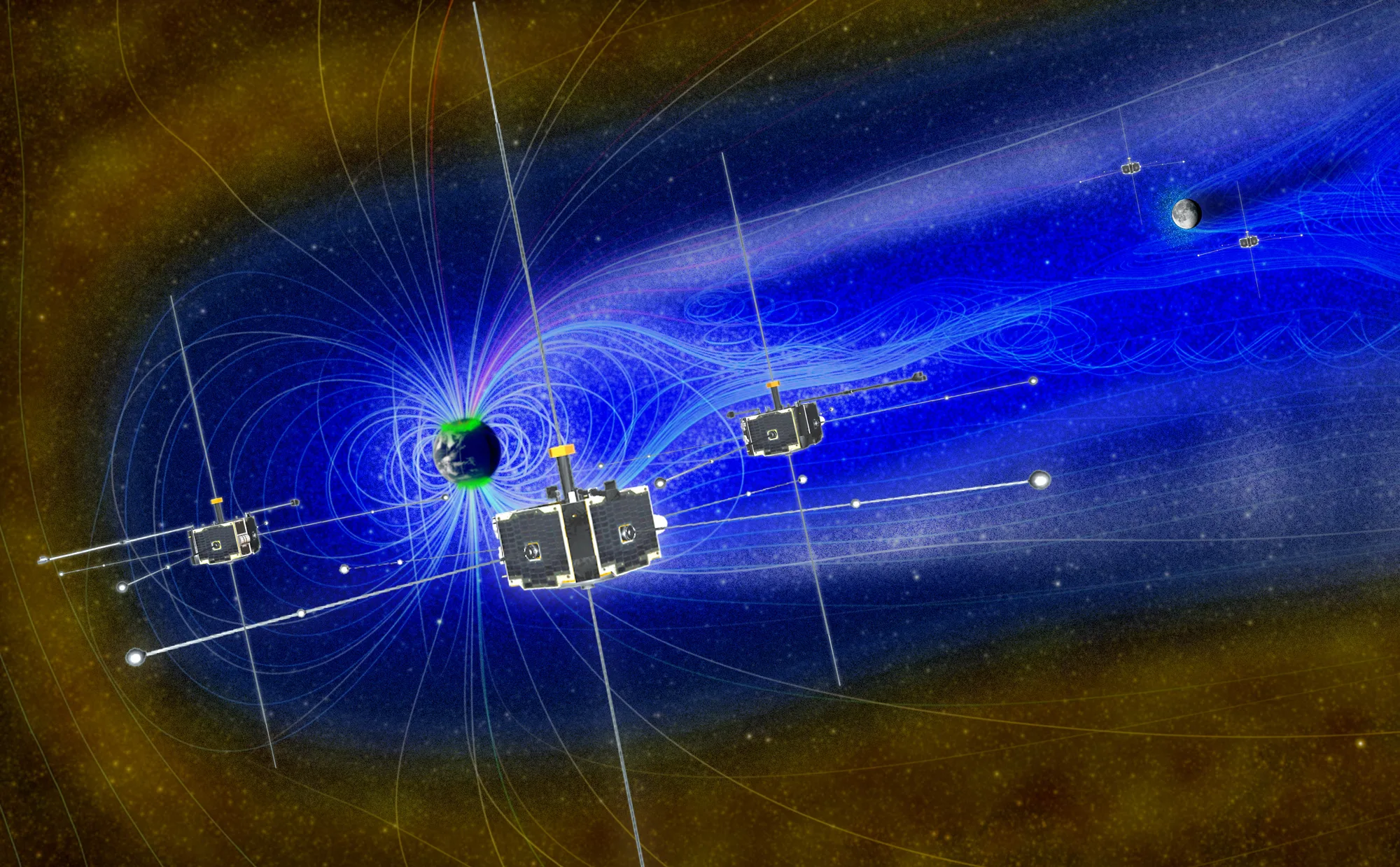
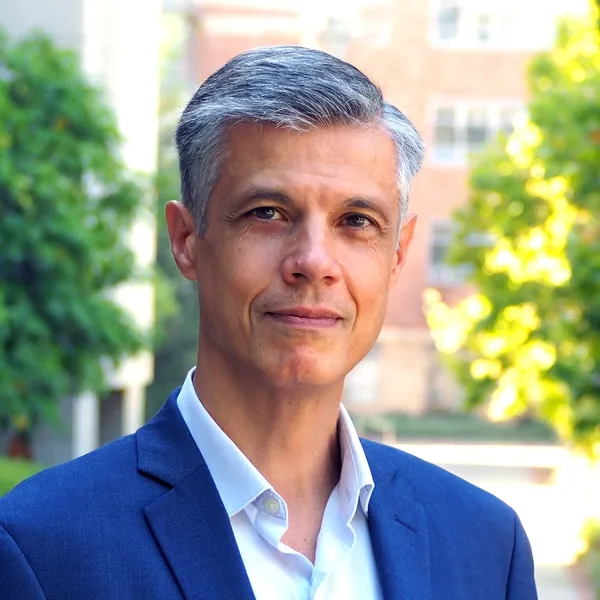
UCLA EPSS Professor Vassilis Angelopoulos has been selected by the American Geophysical Union to give this year’s Space Physics and Aeronomy Section Van Allen Lecture at the AGU Meeting in December 2025. The James Van Allen Lecture is presented biennially to a space scientist who has made significant contributions to the field of magnetospheric science. It is named to honor the life and work of astrophysicist and space pioneer James A. Van Allen. Prof. Angelopoulos is an experimental space physicist. He is the principal investigator of the ELFIN, THEMIS, and ARTEMIS missions, studying space weather phenomena at Earth and the moon’s plasma interaction with its space environment.

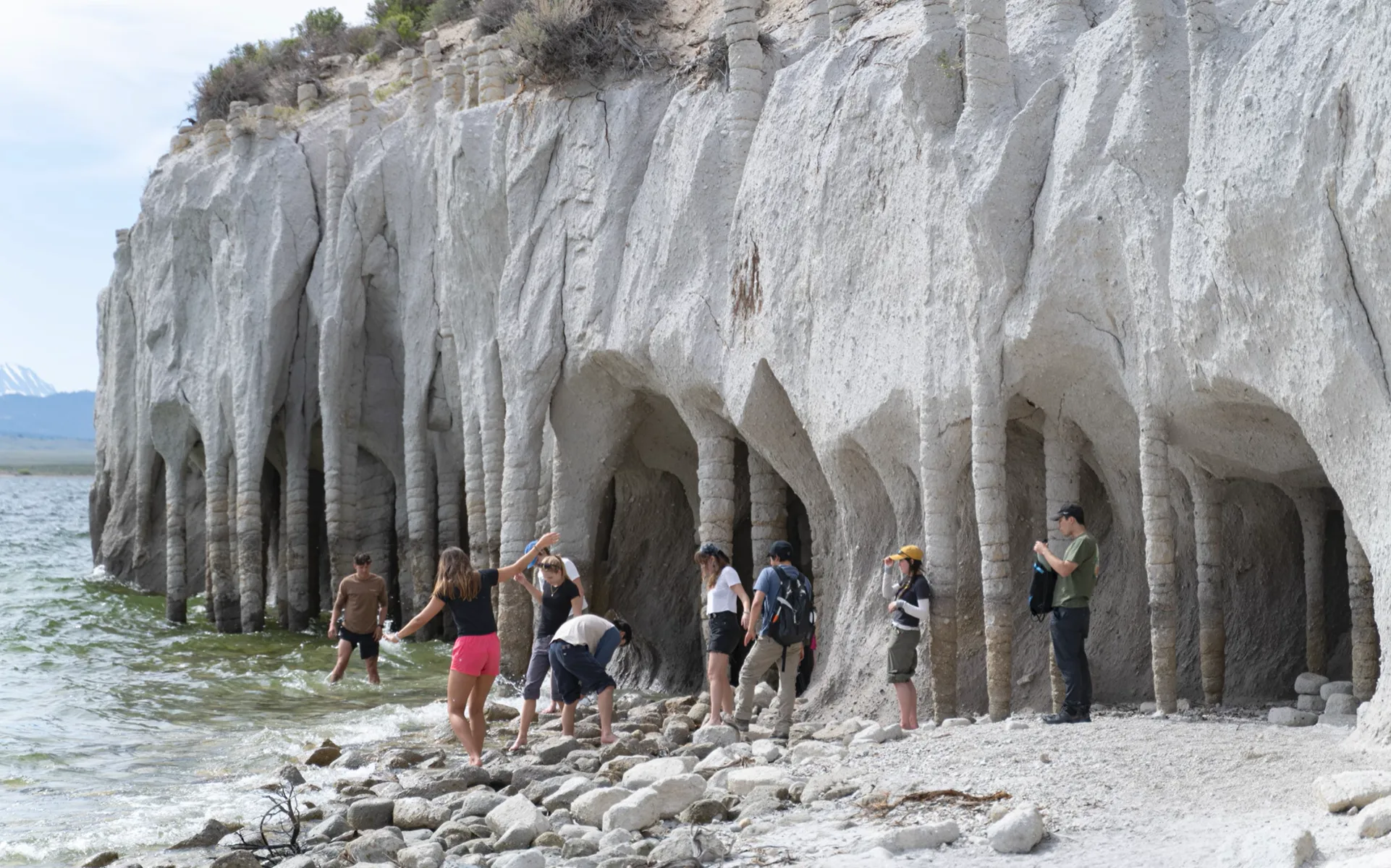
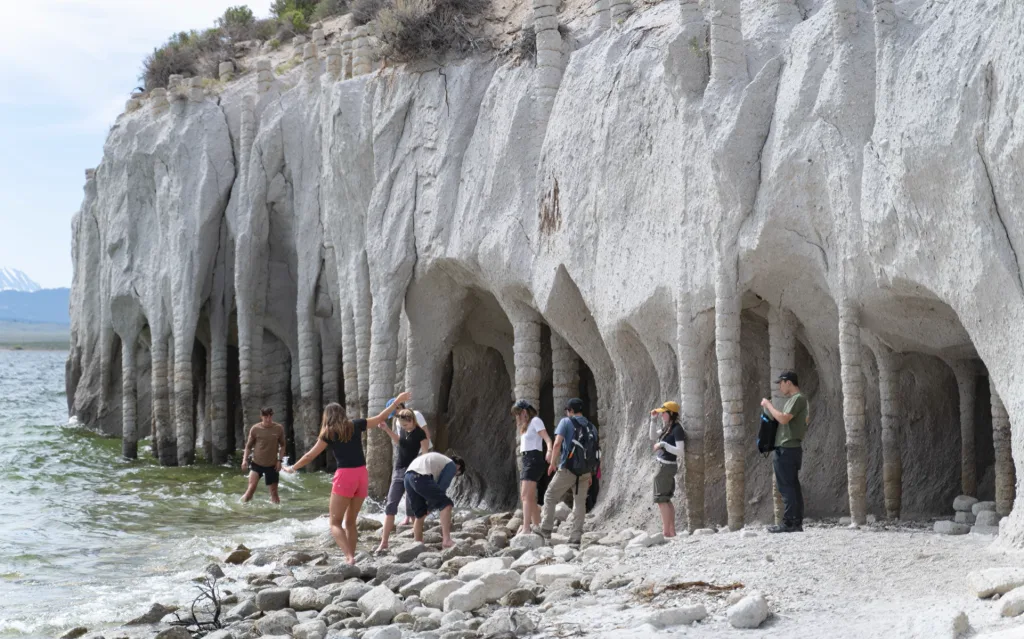
This video captures moments from our Spring 2025 Igneous Petrology field trip to Owens Valley, California. We explored volcanic features, hiked through the Sierra, and spent evenings at the White Mountain Research Station under brilliant sunsets and starry skies. Beyond studying rocks, students reconnected with nature — wading in Lake Crowley, playing basketball and volleyball, and enjoying the quiet beauty far from city lights. Such moments remind us why we study Earth in the first place — it’s the love for nature we all share as human beings.
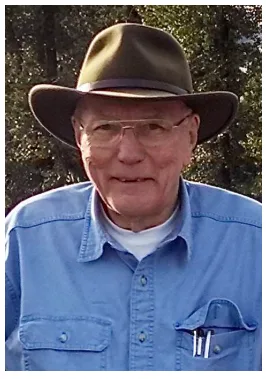
The UCLA Department of Earth, Planetary, and Space Sciences is saddened to share the passing of Professor Emeritus Ronald Lee Shreve, who died at his home in Friday Harbor, Washington, on April 17, 2025, at the age of 94.
Ron joined UCLA in 1960, after earning his Ph.D. in geology from Caltech (where he had also received his BS in Physics) and completing a postdoctoral fellowship in Europe at the Swiss Federal Institute of Technology in Zürich. He was appointed to the Department of Earth and Space Sciences (later renamed Earth, Planetary, and Space Sciences) and also held an appointment in UCLA’s Institute of Geophysics and Planetary Physics (IGPP). He became an associate professor in 1965 and a full professor soon after. Upon his retirement in 1994, he was named Professor Emeritus.
At UCLA, his research interests spanned geomorphology, quaternary geology, glaciology, and geophysical physics. He was known for his work on landslides, sediment transport, glaciers, and river networks. He often described himself, with characteristic humor, as a “renegade physicist” and a “heretical geologist,” reflecting the way he combined mathematical precision with a geologist’s eye for the field. His theory of river network topology, along with his work on landslide dynamics and glacier hydrology, left a lasting mark on the field.
For his students, Ron’s impact went far beyond his publications. His courses in geomorphology, glaciology, and field geology were both challenging and inspiring, and he gave students both freedom and responsibility, encouraging them to think independently rather than mirror his own research. Many recall that his mentorship paired high standards with warmth and humor. His Introduction to Field Geology students will also fondly remember his challenging map problems, with titles such as “Dog’s Breakfast” and “Coronary Canyon.”
Mark Cloos, a former UCLA graduate student who went on to collaborate with Shreve for nearly a decade, remembered him as both a mentor and a friend:
“Working with Ron was the most satisfying collaboration of my life,” Cloos said. “He had a rare ability to turn complex physical ideas into clear, elegant insights that still shape how we think about the Earth today. I’ll always cherish our phone calls that began with science and ended with conversations about life.”
Ron’s daughter, Beth, offered this reflection: “My father was an intellectual, with broad and deep curiosity about the workings of the world, not just in his area of expertise. He could fix anything. He could build anything, and his work was always meticulous. He had a great sense of humor, his specialty being puns.”
Like any good geologist, Ron loved the outdoors and would often take his family on long trips into the Sierra Nevada. And, like any good scientist, he had a variety of passions outside of his work. Ron was known as an inventive cook and a lover of Baroque music.
Ron is survived by his wife of 63 years, Jean. His daughter, Beth, and son-in-law, Jay. And his grandsons, Nathan and Koby.
Professor Shreve’s legacy lives on in his students, his colleagues, and in the department he helped shape over more than three decades. We remember him as a brilliant scientist, a generous teacher, and a warm presence whose curiosity and humor enriched all who knew him.
Click here to read Mark Cloose’s tribute to Emeritus Shreve.
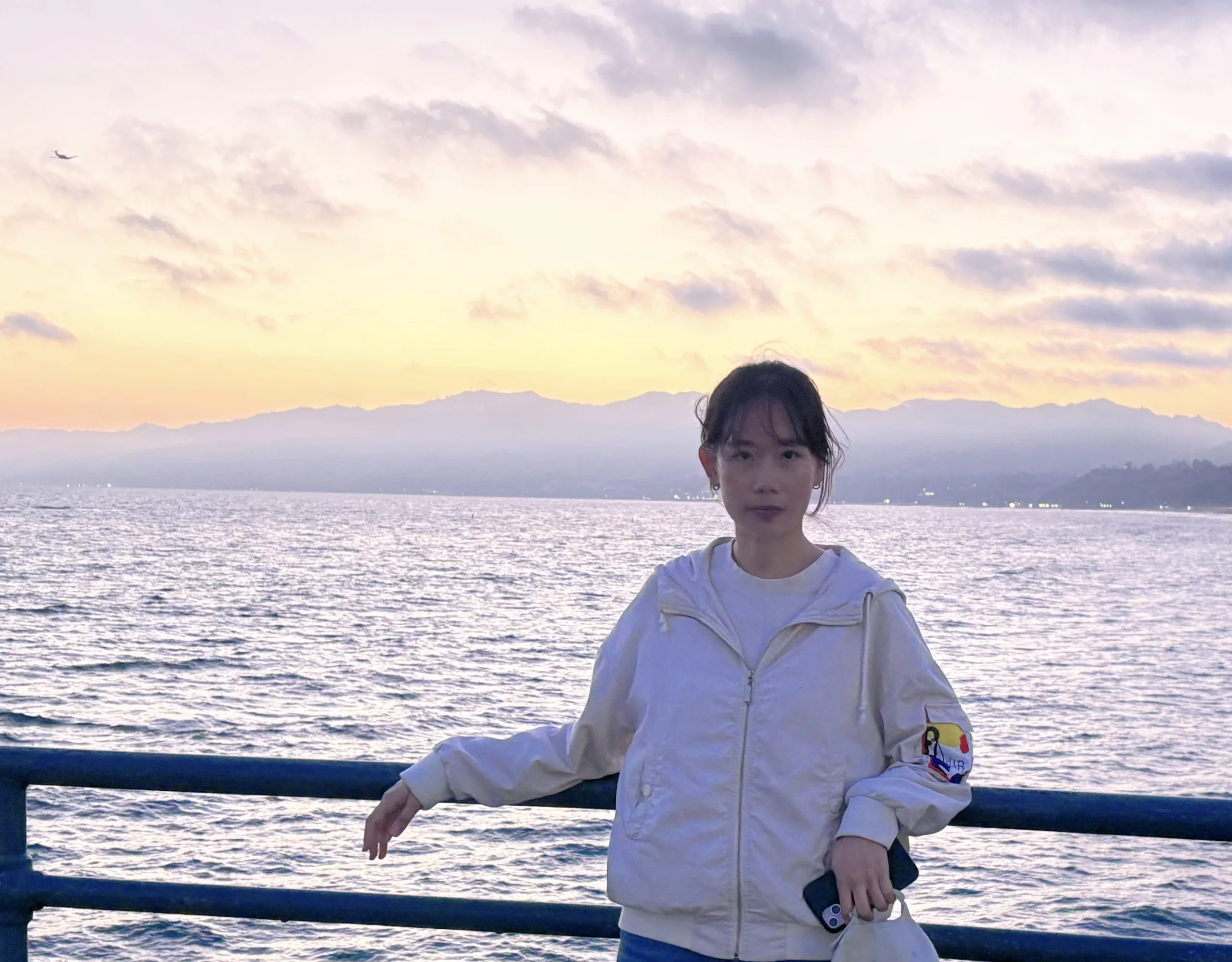
 My name is Xiaofei Shi and I was recently honored with the Fred Scarf Award from the American Geophysical Union for best thesis in Space Physics and Aeronomy. During my PhD, I studied how charged particles in space, such as electrons, gain and lose energy as they move around near Earth. These processes, though invisible, are important because they shape the radiation belts that surround our planet and drive what we call space weather.
Space weather is drawing increasing attention because of its potential impact on modern technology and human spaceflight. Fundamentally, science focused on wave-particle interactions and charged particle dynamics broadens our understanding of space weather. Practically, it strengthens our ability to predict extreme radiation environments in space—conditions that can damage satellites or put astronauts at risk. In other words, understanding the energetic particles around Earth isn’t just an academic exercise; it has real implications for the technologies and people who venture beyond our atmosphere.
The Earth, Planetary, and Space Sciences department at UCLA, where I did my work, has been a leader in this area and I’m proud that the work I do was acknowledged.
Most past theories did not fully explain how the electrons get to near-relativistic energy upstream of Earth’s bow shock, and my work showed that a complex process can cause it. In fact, I found that electrons can be accelerated in multiple steps, almost like climbing a ladder, through a chain of processes that earlier models didn’t capture. This discovery revealed a new way that particles can be energized in space.
One of the hardest challenges I faced was making sense of data that showed electrons being accelerated across a wide range of energies. No single explanation fit the observations. After a lot of trial and error (and many conversations with collaborators) I realized the answer was to combine different approaches. By using both computer simulations and statistical analysis of spacecraft data, I built a more complete picture of how these multi-step processes work.
This research was very collaborative, and I’m grateful to my advisor and coauthors who guided and supported me. Now that I’ve finished my dissertation, I plan to continue this work as a postdoctoral researcher. There’s still so much to learn about the particle acceleration happening around Earth, and I’m excited to keep exploring them.