
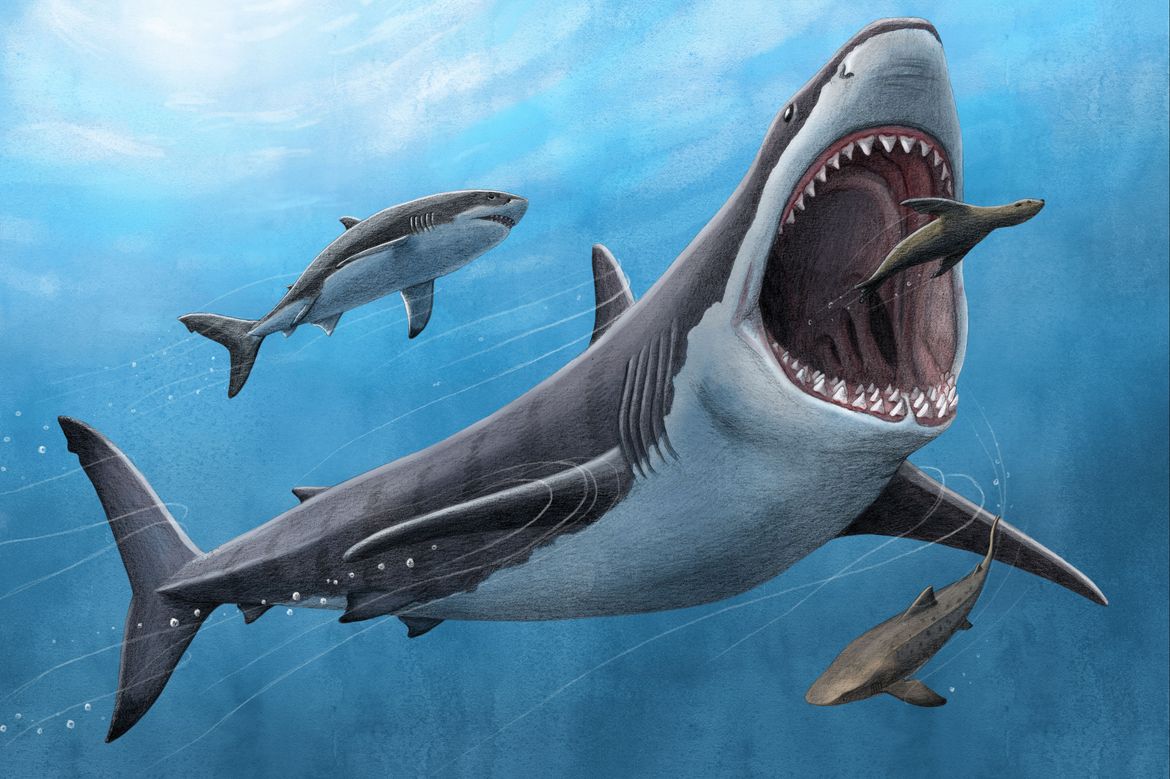
 Megalodons, which went extinct 3.6 million years ago, are believed to have grown to lengths of 50 feet. | Credit: Alex Boersma/PNAS
EPSS Professor Aradhna Tripati is co-leader in a project across UCLA, UC Merced, and William Paterson University that discovered that the largest marine predator that ever lived was no cold-blooded killer, but in fact warm-blooded.
UCLA Newsroom writes that the project, which analyzed isotopes in the tooth enamel of the long-extinct ancient shark, “sheds light on the warm-blooded animal’s ability to regulate its body temperature — and might help explain why it went extinct.”
Read more about the megalodon’s warm-blooded demise, and its implications for understanding current and future environmental changes, through UCLA Newsroom here (opens in a new tab).
You can also find their discovery featured in BBC (opens in a new tab), Reuters (opens in a new tab), Smithsonian Magazine (opens in a new tab), Discover Magazine (opens in a new tab), The Times (opens in a new tab), Forbes (opens in a new tab), Science News (opens in a new tab), and National Geographic (opens in a new tab), among many other news outlets!