
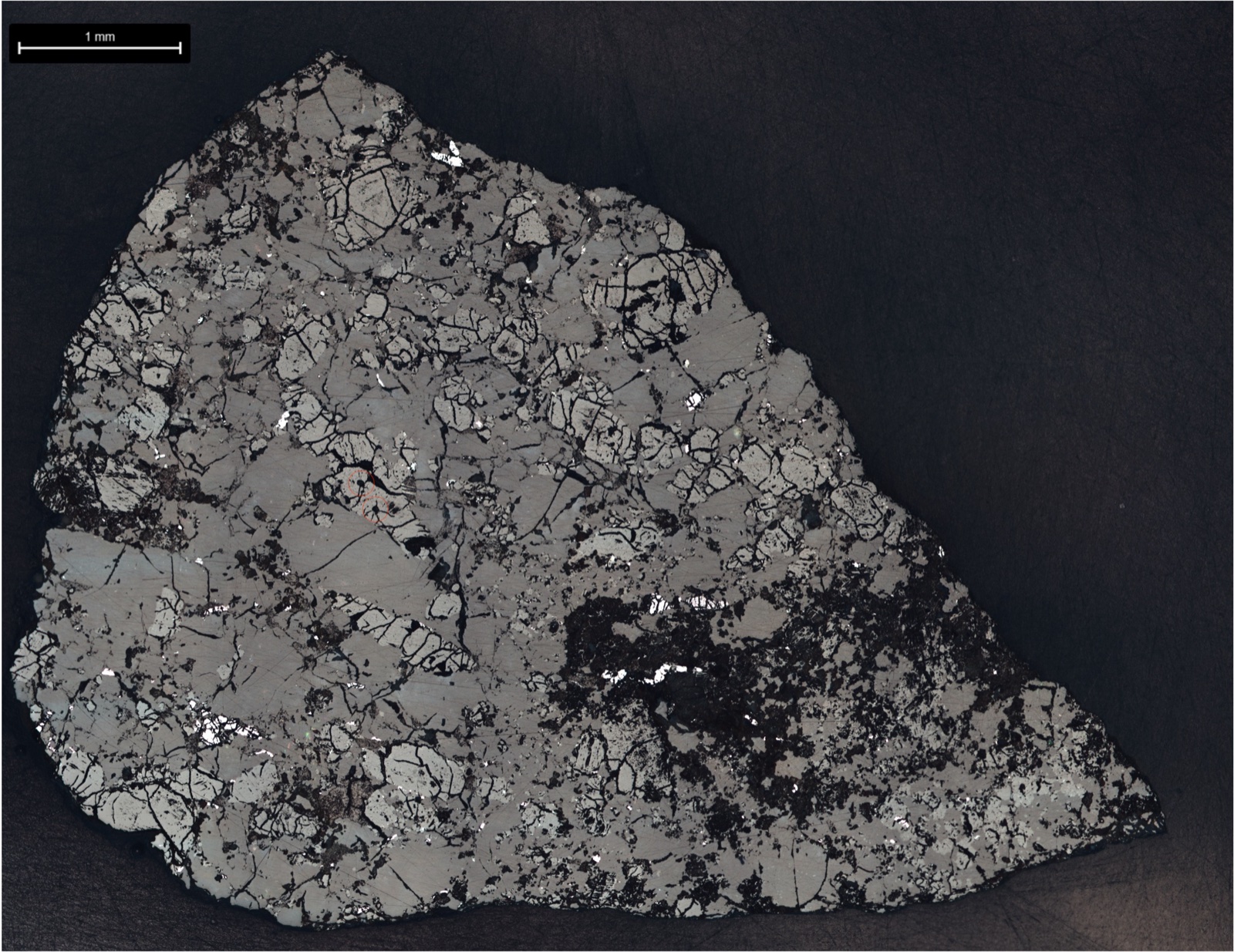
A new study demonstrates that a recently discovered Martian meteorite, Teghaza 001, is at least 4.1 billion years old and has a mineralogy and geochemistry distinct from previous Martian meteorites, providing a potentially unique insight into the earliest periods of Martian history. While this paper characterizing the meteorite has been undergoing review, a separate paper was published in Science Advances (opens in a new tab) showing that components of the ancient Martian hydrosphere are preserved in Teghaza 001. The UCLA Ion Microprobe (SIMS) Laboratory (opens in a new tab) in EPSS carried out the U-Pb dating that established the meteorite’s age.
Read the JPL press release: NASA-funded Study Details One of Oldest Mars Meteorites Ever Found (opens in a new tab)
Read the paper in Science: https://www.science.org/doi/10.1126/science.adz5646 (opens in a new tab)