Skip to Main Content

Why EPSS?

3:1 Student-to Faculty Ratio
Small Class Sizes
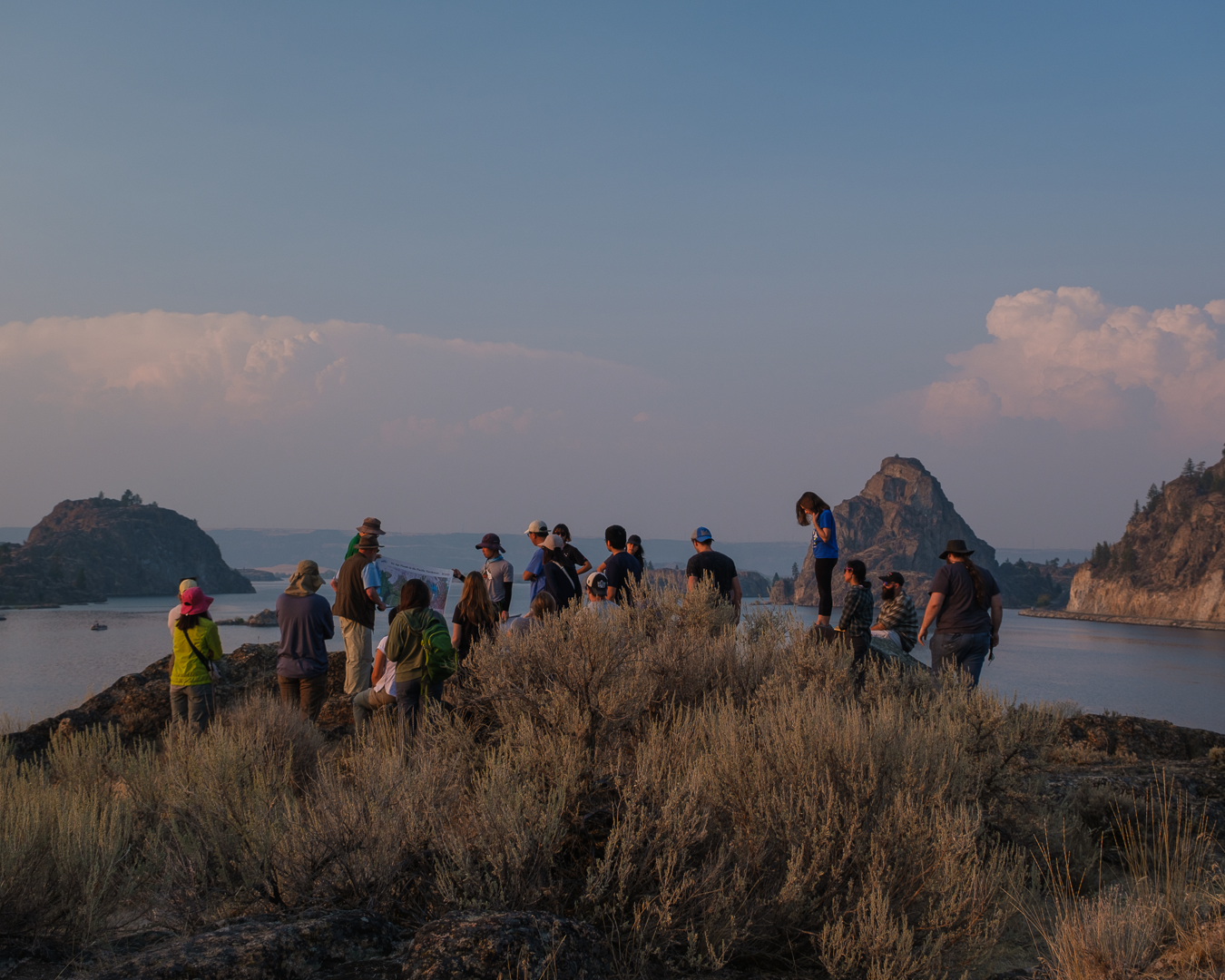
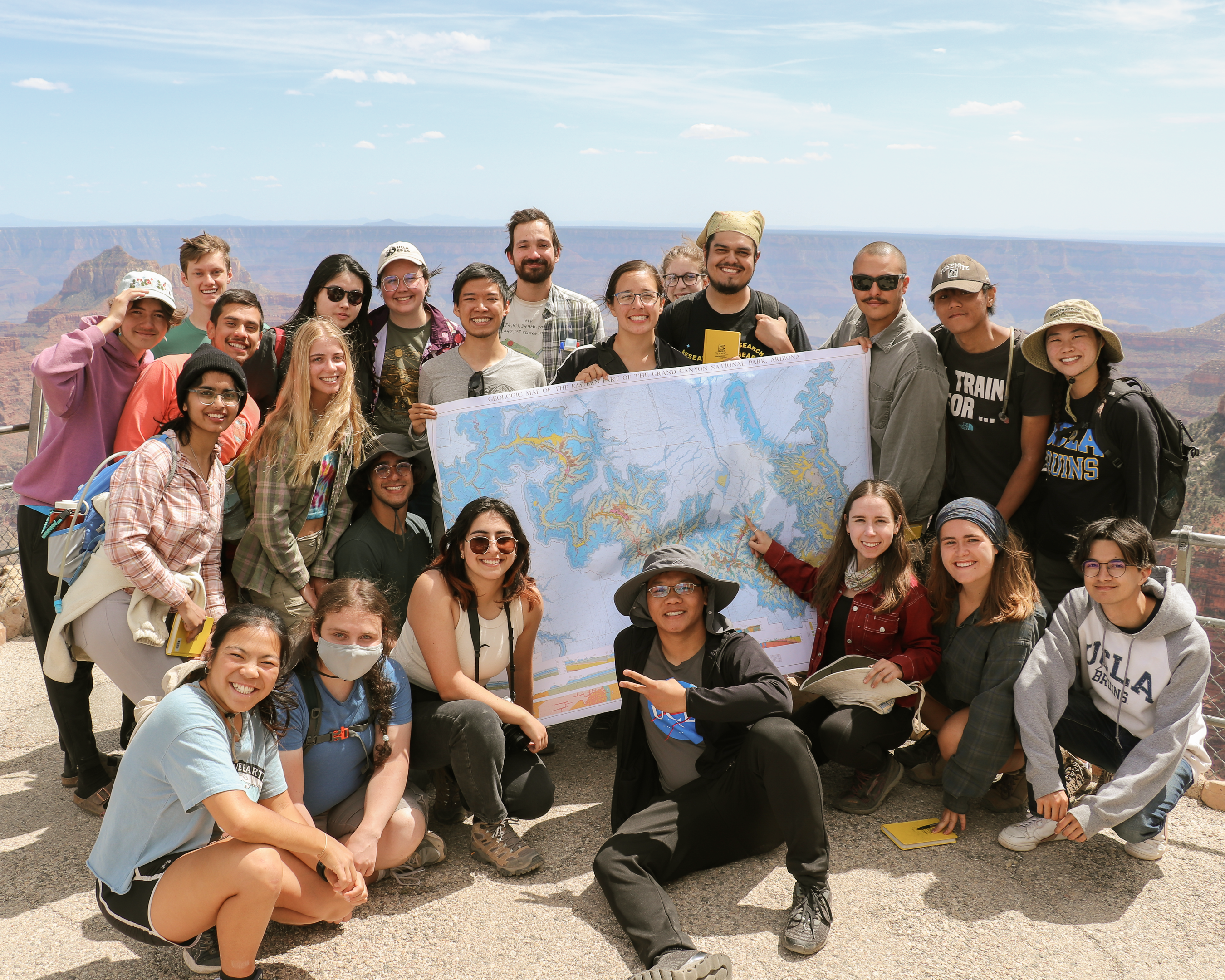
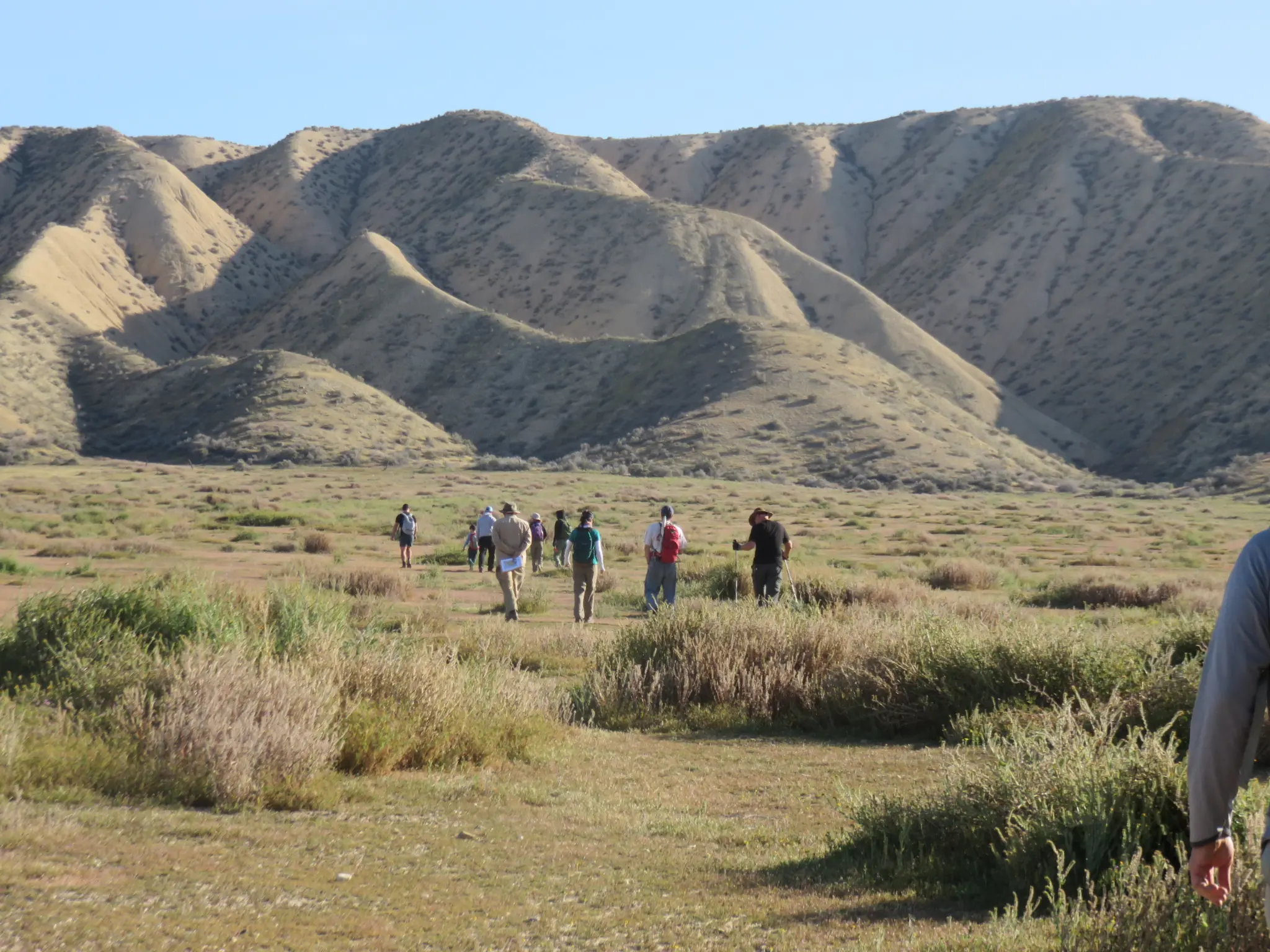
Field Trips
Lab Work
Research Opportunities

Study real world problems on Earth and other planets through applied physics, chemistry or biology!

Explore Our Programs

Department Testimonials

“I really enjoy this program, the research opportunities it has given me, and the familiarity I get to have with the faculty!”

“My experience has been amazing! Getting into research was wonderful, and the department was very welcoming.”

THIS IS THE GRAD STUDENT HANDBOOK PAGE

The Department of Earth, Planetary, and Space Sciences offers four graduate programs leading to the MS and PhD degrees.


  • The Florida Project: Taking Action to Help Kids Like Moonee

    The Florida Project: Taking Action to Help Kids Like Moonee

    A wonderful serenity has taken possession of my entire soul, like these sweet mornings of spring which I enjoy with my whole heart. I am alone, and feel the charm of existence in this spot, which was created for the bliss of souls like mine. I am so happy, my dear friend, so absorbed in…

    Learn More: The Florida Project: Taking Action to Help Kids Like Moonee

  • NASA Telescope will Hunt Down ‘City Killer’ Asteriods

    NASA Telescope will Hunt Down ‘City Killer’ Asteriods

    Learn More: NASA Telescope will Hunt Down ‘City Killer’ Asteriods

  • Interstellar comet 3I/ATLAS caught on camera in new images from Hubble Space Telescope and JUICE Jupiter probe

    Interstellar comet 3I/ATLAS caught on camera in new images from Hubble Space Telescope and JUICE Jupiter probe

    Learn More: Interstellar comet 3I/ATLAS caught on camera in new images from Hubble Space Telescope and JUICE Jupiter probe

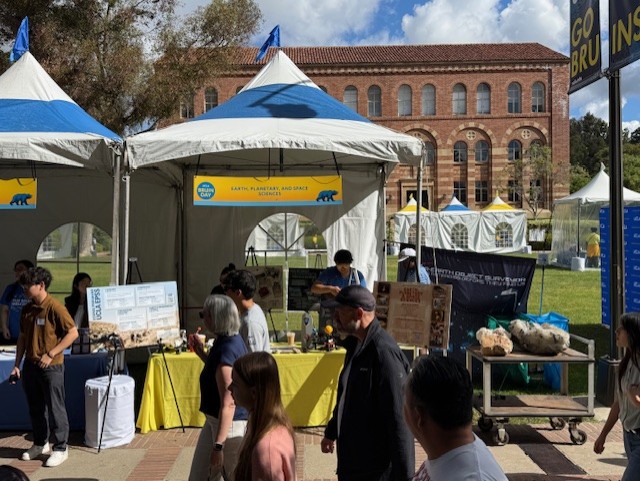
  • ‘Science is for everybody’: Exploring Your Universe fair connects the community to UCLA

    ‘Science is for everybody’: Exploring Your Universe fair connects the community to UCLA

    Learn More: ‘Science is for everybody’: Exploring Your Universe fair connects the community to UCLA

  • New Seismic Measurements from Mars Suggest New Ideas about Planet’s Formation

    New Seismic Measurements from Mars Suggest New Ideas about Planet’s Formation

    Learn More: New Seismic Measurements from Mars Suggest New Ideas about Planet’s Formation

  • How an Alumni Newsletter has helped UCLA Physical Scientists Bruins Stay Friends Across Decades

    How an Alumni Newsletter has helped UCLA Physical Scientists Bruins Stay Friends Across Decades

    Learn More: How an Alumni Newsletter has helped UCLA Physical Scientists Bruins Stay Friends Across Decades

  • Jerry Xuan

    Jerry Xuan

    Postdoctoral Scholar Postdoc jxuan@epss.ucla.edu

    Learn More: Jerry Xuan

  • Ankan Sur

    Ankan Sur

    Postdoctoral ScholarPostdoc ankansur@epss.ucla.edu

    Learn More: Ankan Sur

  • Pierre-Alexis Roy

    Pierre-Alexis Roy

    Postdoctoral Scholar Postdoc paroy@epss.ucla.edu

    Learn More: Pierre-Alexis Roy

  • Madeleine Kerr

    Madeleine Kerr

    Postdoctoral ScholarPostdoc mkerr@g.ucla.edu 1813A Geology Ph.D. University of California, San Diego 2025

    Learn More: Madeleine Kerr

  • Danica Adams

    Danica Adams

    Postdoctoral ScholarPostdoc danica.adams@ucla.edu

    Learn More: Danica Adams

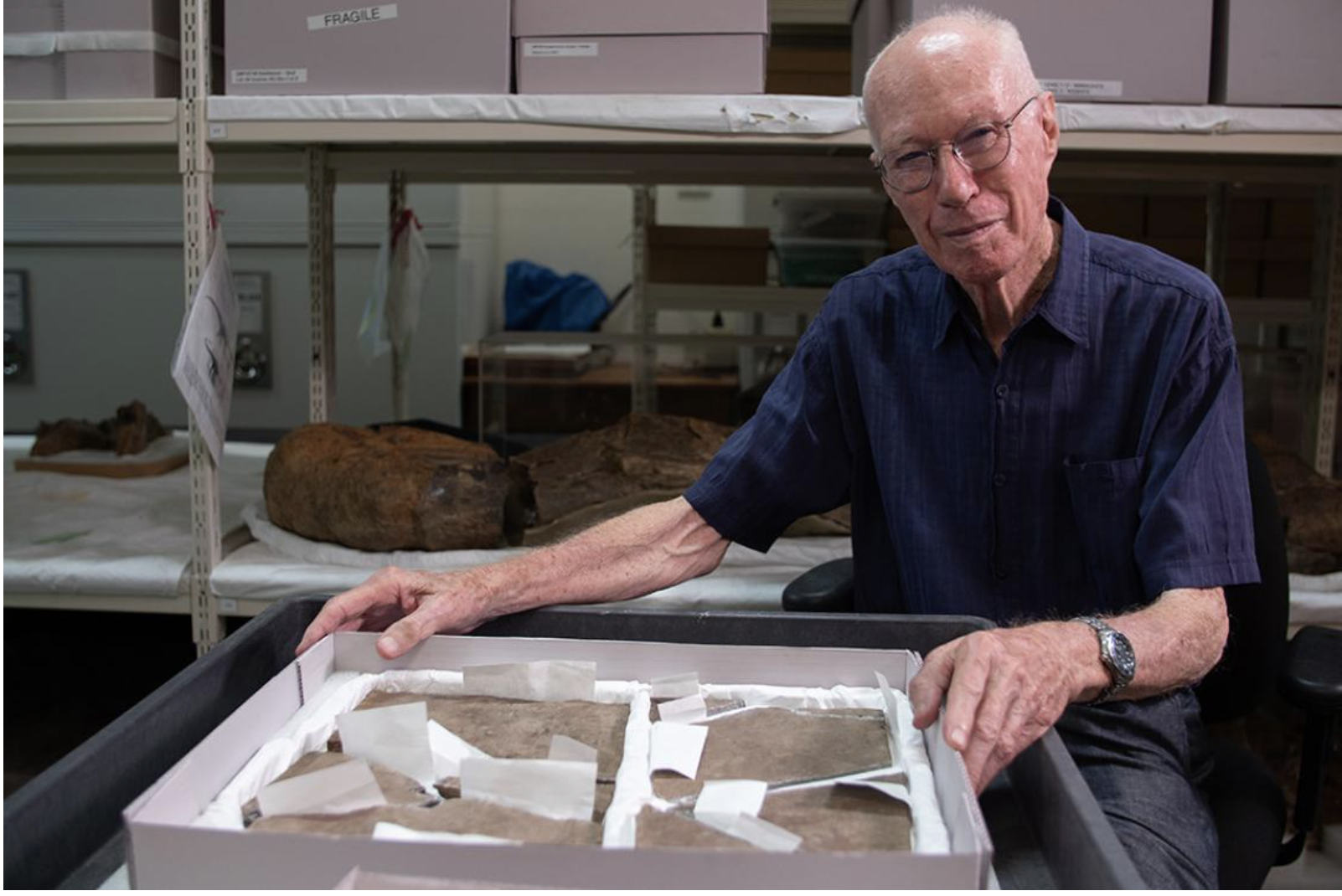
  • In Memoriam: Arthur J. Montana (1935–2025)

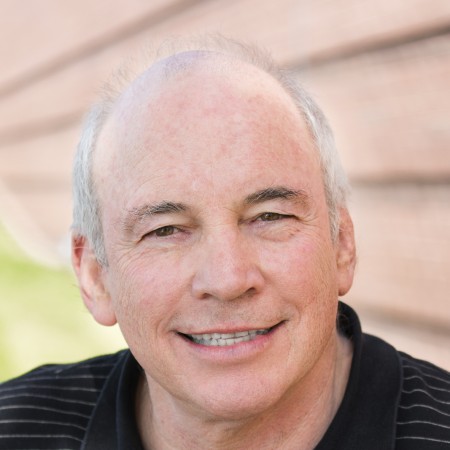
    In Memoriam: Arthur J. Montana (1935–2025)

    Arthur Montana, professor emeritus of Earth, Planetary, and Space Sciences at UCLA, passed away on August 8, 2025, at the age of 90. Born in Montana, Montana earned his Ph.D. in geology from Penn State University, where he later served as a junior faculty member before joining UCLA in 1976. His early postdoctoral work with…

    Learn More: In Memoriam: Arthur J. Montana (1935–2025)

  • First UCLA Reception at Geological Society of America in Decades: A Moment of Comradery and Reminiscing

    First UCLA Reception at Geological Society of America in Decades: A Moment of Comradery and Reminiscing

    EPSS sponsored a spirited reception during the Geological Society of America (GSA) meeting in San Antonio, the first UCLA reception at GSA in decades, showcasing the strength and resilience of the department. Hosted by Assistant Professor John He, who recently joined UCLA in 2024, the event brought together generations of Bruins to celebrate their shared…

    Learn More: First UCLA Reception at Geological Society of America in Decades: A Moment of Comradery and Reminiscing

  • Benjamin Tan

    Benjamin Tan

    Graduate StudentStudent benjaminqtan@g.ucla.edu

    Learn More: Benjamin Tan

  • Professor Vassilis Angelopoulos selected by AGU to give 2025 Van Allen Lecture

    Professor Vassilis Angelopoulos selected by AGU to give 2025 Van Allen Lecture

    UCLA EPSS Professor Vassilis Angelopoulos has been selected by the American Geophysical Union to give this year’s Space Physics and Aeronomy Section Van Allen Lecture at the AGU Meeting in December 2025. The James Van Allen Lecture is presented biennially to a space scientist who has made significant contributions to the field of magnetospheric science.…

    Learn More: Professor Vassilis Angelopoulos selected by AGU to give 2025 Van Allen Lecture

  • Critical research hangs in the balance as UC faces unprecedented federal threats

    Critical research hangs in the balance as UC faces unprecedented federal threats

    Professor Amy Mainzer speaks about preventing a catastrophic asteroid impact on Earth Click Here to Learn More.

    Learn More: Critical research hangs in the balance as UC faces unprecedented federal threats

  • Field trips are the heart of Earth Science – Learning Inspired By Nature

    Field trips are the heart of Earth Science – Learning Inspired By Nature

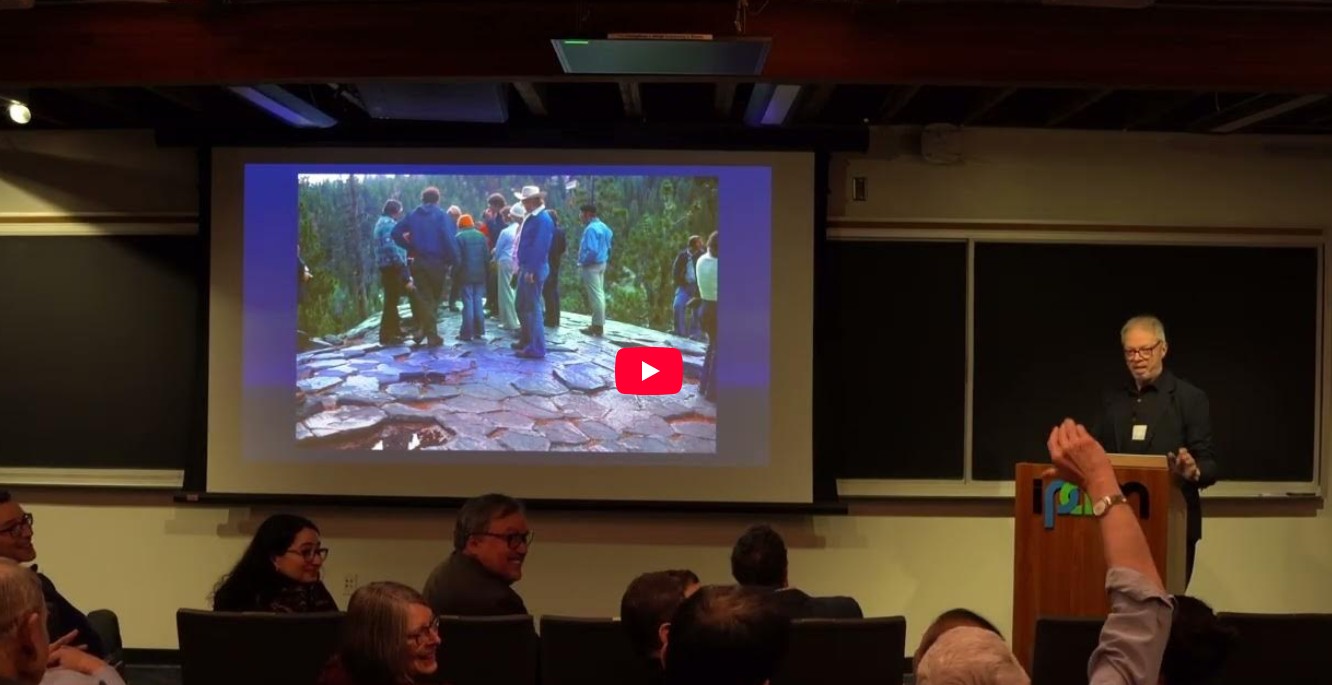
    Click Here to Watch This video captures moments from our Spring 2025 Igneous Petrology field trip to Owens Valley, California. We explored volcanic features, hiked through the Sierra, and spent evenings at the White Mountain Research Station under brilliant sunsets and starry skies. Beyond studying rocks, students reconnected with nature — wading in Lake Crowley,…

    Learn More: Field trips are the heart of Earth Science – Learning Inspired By Nature

  • UCLA scientists uncover record-breaking supershear rupture in 2025 Myanmar earthquake

    UCLA scientists uncover record-breaking supershear rupture in 2025 Myanmar earthquake

    A new study led by Professor Lingsen Meng and Dr. Liuwei Xu (UCLA Department of Earth, Planetary, and Space Sciences) reveals that the devastating 2025 Mandalay, Myanmar earthquake (Mw 7.7) produced one of the fastest and longest earthquake ruptures ever recorded on land. The research, published in Science on October 29, 2025, shows that the earthquake ruptured more than 530 kilometers along the Sagaing Fault, with…

    Learn More: UCLA scientists uncover record-breaking supershear rupture in 2025 Myanmar earthquake

  • Sebastian Krause

    Sebastian Krause

    Lecturer sjkrause@g.ucla.edu

    Learn More: Sebastian Krause

  • Yue Yuan

    Yue Yuan

    Graduate Student Student yueyuan2003@g.ucla.edu

    Learn More: Yue Yuan

  • Sophie Ye

    Sophie Ye

    Graduate Student Student sophye@g.ucla.edu

    Learn More: Sophie Ye

  • Aiyana Vazquez Ochoa

    Aiyana Vazquez Ochoa

    Graduate Student Student aovazquez@ucla.edu

    Learn More: Aiyana Vazquez Ochoa

  • Alonzo Olitt

    Alonzo Olitt

    Graduate Student Student aolitt23@g.ucla.edu

    Learn More: Alonzo Olitt

  • Michael Ng

    Michael Ng

    Graduate Student Student mng362@g.ucla.edu

    Learn More: Michael Ng

  • Mengfei Qi

    Mengfei Qi

    Graduate Student Student mengfeiqi05@ucla.edu

    Learn More: Mengfei Qi

  • Chengzhi Mao

    Chengzhi Mao

    Graduate Student Student chengzhi@ucla.edu

    Learn More: Chengzhi Mao

  • Yang Ma

    Yang Ma

    Graduate Student Student yangm0209@ucla.edu

    Learn More: Yang Ma

  • Olivia Logan

    Olivia Logan

    Graduate StudentStudent ologan24@g.ucla.edu

    Learn More: Olivia Logan

  • Lapit Lapinee

    Lapit Lapinee

    Graduate StudentStudent llapinee@ucla.edu

    Learn More: Lapit Lapinee

  • Yu-Chieh Huang

    Yu-Chieh Huang

    Graduate Student Student hyuchieh@ucla.edu

    Learn More: Yu-Chieh Huang

  • Carrie He

    Carrie He

    Graduate StudentStudent carriehe@ucla.edu  

    Learn More: Carrie He

  • Isabela Garcia

    Isabela Garcia

    Graduate Student Student isabelargarcia@g.ucla.edu

    Learn More: Isabela Garcia

  • Pedro Foz Caltabiano

    Pedro Foz Caltabiano

    Graduate Student Student pedrocaltabiano@g.ucla.edu

    Learn More: Pedro Foz Caltabiano

  • Joseph Feldman-Peterson

    Joseph Feldman-Peterson

    Graduate Student Student josephfp011@g.ucla.edu

    Learn More: Joseph Feldman-Peterson

  • In Memoriam: Professor Ronald L. Shreve (1930–2025)

    In Memoriam: Professor Ronald L. Shreve (1930–2025)

    The Professor Emeritus, pun-lover, and self-described “heretical geologist” was a member of the EPSS department for over 30 years. The UCLA Department of Earth, Planetary, and Space Sciences is saddened to share the passing of Professor Emeritus Ronald Lee Shreve, who died at his home in Friday Harbor, Washington, on April 17, 2025, at the…

    Learn More: In Memoriam: Professor Ronald L. Shreve (1930–2025)

  • Recent EPSS G&SP Ph.D. Graduate Xiaofei Shi Honored with Fred Scarf Award

    Recent EPSS G&SP Ph.D. Graduate Xiaofei Shi Honored with Fred Scarf Award

    My name is Xiaofei Shi and I was recently honored with the Fred Scarf Award from the American Geophysical Union for best thesis in Space Physics and Aeronomy. During my PhD, I studied how charged particles in space, such as electrons, gain and lose energy as they move around near Earth. These processes, though invisible,…

    Learn More: Recent EPSS G&SP Ph.D. Graduate Xiaofei Shi Honored with Fred Scarf Award

  • The dominant role of the electron isotropy boundary in controlling Earth’s outer radiation belt electron lifetimes

    Date: 2025-10-24 00:00:00 Time: 3:30 – 4:30pm Location: 3853 Slichter Hall Presented By: Dr. Man Hua Abstract: Earth’s outer radiation belt is a doughnut-shaped region in space, containing stably trapped energetic electrons. Its outer boundary is closely related to the electron isotropy boundary (IB), which separates the outer radiation belt from the isotropic, precipitating electrons found…

    Learn More: The dominant role of the electron isotropy boundary in controlling Earth’s outer radiation belt electron lifetimes

  • Susana Orozco

    Susana Orozco

    Events Specialist Technical Staff s.orozco@ucla.edu

    Learn More: Susana Orozco

  • “Salt Tectonics” on Titan: radial labyrinths as topographic expressions of solid-state flow

    Date: 11/7/2025 Time: 12:00 – 1:00 pm Location: 3853 Slichter Hall Presented By: Dr. Ashley Schoenfeld – JPL Abstract: Surface observations of Saturn’s moon Titan revealed features characterized as dissected, elevated plateaus with high valley density known as labyrinth terrains. Of this terrain class, a subtype referred to as radial labyrinth is described as dome-shaped uplifts with…

    Learn More: “Salt Tectonics” on Titan: radial labyrinths as topographic expressions of solid-state flow

  • Radiation Belts, Space Weather, and Particle Detectors: From Fundamental Physics to Mission Safety

    Date: 2025-10-17 Time: 3:30 – 4:30pm Location: 3853 Slichter Hall Presented By: Dr. Leonid Olifer Abstract: Space is never empty. Instead, it is filled with high-energy particles originating at the Sun and trapped by Earth’s magnetic field, forming dynamic radiation environments that pose significant risks to satellites, astronauts, and future exploration missions. In this talk, I will discuss…

    Learn More: Radiation Belts, Space Weather, and Particle Detectors: From Fundamental Physics to Mission Safety

  • Advances in forecasting man-made and natural earthquakes

    Presented by: Prof. Jean-Philippe Avouac Affiliation: California Institute of Technology  Location: 3853 Slichter Hall  Abstract: Earthquakes occur naturally driven by tectonic processes, but they can also be induced by human activities. In particular, earthquakes induced by extraction or injection of fluids in the subsurface — during gas production, CO2 storage of geothermal operations for example — provide…

    Learn More: Advances in forecasting man-made and natural earthquakes

  • Tidal evolution of the early Earth-Moon system and why we care about it

    Presented by: Prof. Jun Korenaga Affiliation: Yale University Location: Young Hall 4222  Abstract: The early evolution of the Earth-Moon system prescribes the tidal environment of the Hadean Earth and holds the key to the formation mechanism of the Moon. Estimating its early state by backtracking from the present, however, suffers from considerable uncertainties associated with ocean tides. Tidal…

    Learn More: Tidal evolution of the early Earth-Moon system and why we care about it

  • Exploring Habitable Sub-Neptunes and the Case of Missing Methane: From Lab to Theory

    Presented by: Prof. Xinting Yu Affiliation: University of Texas at San Antonio Location: Young Hall 4222  Abstract: The field of exoplanets is evolving with astronomical speed, with over 6000 exoplanets discovered to date, including many planets that have no counterparts in the Solar System. More recently, the James Webb Space Telescope has revolutionized our understanding of exoplanet…

    Learn More: Exploring Habitable Sub-Neptunes and the Case of Missing Methane: From Lab to Theory

  • A New Hot Jupiter Census from NASA’s TESS Mission

    Presented by: Dr. Samuel Yee Affiliation: Harvard  Location: 3853 Slichter Hall  Abstract: Hot Jupiters — giant planets on short-period (< 10 days) orbits around their host stars — represent the most extreme outcome of planet formation. Even though they were the first type of exoplanet around Sun-like stars to be discovered, their origins remain unclear. One challenge…

    Learn More: A New Hot Jupiter Census from NASA’s TESS Mission

  • The Thermal Histories of Moons and Asteroids from Telescope Observations

    Presented by: Prof. Katherine de Kleer Affiliation: Caltech Location: 3853 Slichter Hall  Abstract: The heat flow of a planetary body plays a major role in defining its evolution and current composition, driving processes from internal differentiation during its formation through geological activity at the current time. In this talk, I will describe how the ALMA (sub-)millimeter observatory and…

    Learn More: The Thermal Histories of Moons and Asteroids from Telescope Observations

  • My List of the Five Most Important Things We’ve Learned from the Juno Mission

    Presented by:  Prof. Jonathan Lunine Affiliation: NASA JPL Location: 3853 Slichter Hall  Abstract: The Juno spacecraft has been orbiting Jupiter since July 2016 and is completing its first extended mission.  My personal list of the five most important things we’ve learned from the Juno mission during its prime and extended missions goes something like this: 1. Jupiter has…

    Learn More: My List of the Five Most Important Things We’ve Learned from the Juno Mission

  • Resolving storm and climate signals in the modern Bahamas using satellites and simulations

    Presented by: Dr. Ceci Lopez-Gamundi Affiliation: JPL  Location: 3853 Slichter Hall  Abstract:  Recent advances in Earth observation and computational techniques allow for the rigorous examination of climate and coastal sediment dynamics at scale. Leveraging these novel methods, we investigate how severe storms and oscillations in Earth’s climate affect Great Bahama Bank (GBB), the world’s largest modern…

    Learn More: Resolving storm and climate signals in the modern Bahamas using satellites and simulations

  • Retention of Habitable Atmospheres in Planetary System

    Presented by: Prof. David Brain Affiliation: University of Colorado Boulder Location: 3853 Slichter Hall  Abstract:Planetary atmospheres are not static in time, and the many changes they experience can contribute to making a planet’s surface a more (or less) hospitable place. Interactions between a planet and its host star are especially important. They not only control the temperature of an…

    Learn More: Retention of Habitable Atmospheres in Planetary System

  • Theories of Planet Formation

    Presented by: Prof. Eve J. Lee Affiliation: University of California, San Diego Location: 3853 Slichter Hall Abstract: The discovery of thousands of exoplanets revealed a huge variety in the sizes, masses, and orbital properties of planets outside of our solar system. I will discuss how the physics of gas accretion, dust-gas interaction, and star-disk-planet interaction can shape…

    Learn More: Theories of Planet Formation

  • Teghaza 001: The first pre-Noachian igneous sample from Mars

    Presented by: Dr. Yang Liu Affiliation: JPL  Location: 3853 Slichter Hall  Abstract:  Martian meteorites provide key information about the geological history of Mars. However, our collection is biased by geologically young samples that are not representative of Mars’ exposed surface, which is dominated by ancient rocks. This generates gaps in our knowledge of Mars’ early evolution. Recently,…

    Learn More: Teghaza 001: The first pre-Noachian igneous sample from Mars

  • Deep subduction zone deformation: what exhumed rocks reveal about the slow slip and tremor source region

    Presented by: Whitney Behr Affiliation: ETH Zurich  Location: 3853 Slichter Hall  Abstract: The deep sections of many modern subduction zones release strain through slow slip and tremor (SST), but the structures responsible, deformation mechanisms, and the role of syn-kinematic fluid flow remain hard to resolve from geodetic and seismologic data alone. Exhumed subduction zone rocks, such as those on Syros Island,…

    Learn More: Deep subduction zone deformation: what exhumed rocks reveal about the slow slip and tremor source region

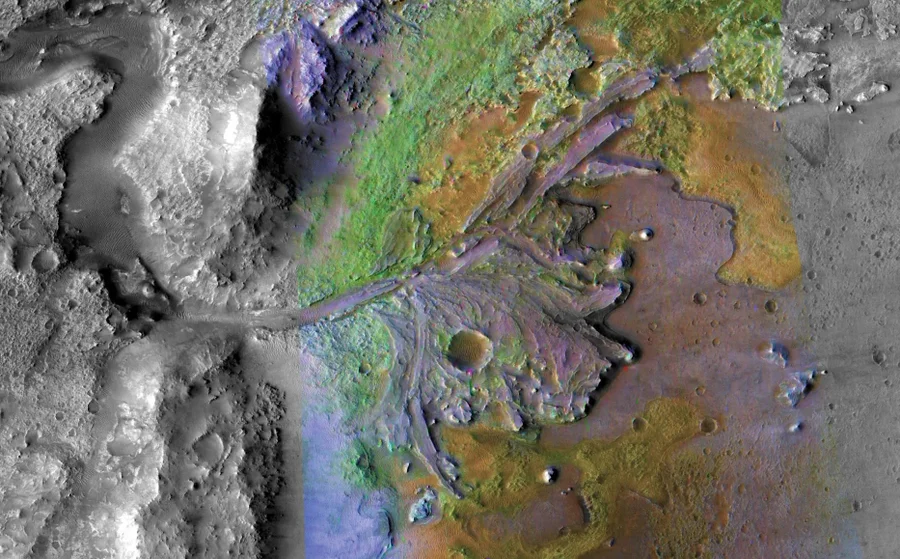
  • Searching for Life in all the Right Places: From dry riverbeds on Mars to Alien Oceans beyond the Asteroid Belt

    Presented by: Dr. Kevin P. Hand Affiliation: JPL  Location: 3853 Slichter Hall  Abstract:  In this talk I will share our recently published results on the detection of potential biosignatures within the Neretva Vallis ancient riverbed on Mars, and then extend outward to our efforts to characterize and explore worlds of the outer solar system that harbor contemporary…

    Learn More: Searching for Life in all the Right Places: From dry riverbeds on Mars to Alien Oceans beyond the Asteroid Belt

  • Using meandering rivers to study the present and future carbon fluxes from Arctic landscapes

    Presented by: Emily C. Geyman Affiliation: Caltech  Location: 3853 Slichter Hall  Abstract: The vast accumulation of carbon in Arctic soils—an estimated 1,700 Pg—has been referred to as a carbon bomb, a sleeping giant, and Pandora’s freezer. These terms all refer to the so-called ‘permafrost–carbon feedback,’ the cascading cycle in which warming temperatures destabilize permafrost soils, liberating large quantities…

    Learn More: Using meandering rivers to study the present and future carbon fluxes from Arctic landscapes

  • Astronomical instruments on a chip – Getting ready for the next-generation telescopes

    Presented by: Prof. Pradip Gatkine Affiliation: P & A, UCLA  Location: 3853 Slichter Hall  Abstract:  Astrophotonics is the application of versatile photonic technologies to channel, manipulate, and disperse guided light from one or more telescopes to achieve scientific objectives in astronomy in an efficient and cost-effective way. The photonic platform of guided light in fibers and waveguides…

    Learn More: Astronomical instruments on a chip – Getting ready for the next-generation telescopes

  • From Lava Flows to Landscapes: Decoding Volcanic Processes on Planetary Surfaces

    Date: 10/30/2025 (Thursday) Time: 3:30 – 4:30 pm Location: 3853 Slichter Hall Presented By: Rosaly Lopes* – TBA Abstract:Volcanism is one of the most important geological processes shaping planetary surfaces. Drawing on data from missions to Earth, Venus, Mars, and the outer solar system, this seminar explores how volcanic activity varies under different planetary conditions.…

    Learn More: From Lava Flows to Landscapes: Decoding Volcanic Processes on Planetary Surfaces

  • Understanding the Role of Water in the Geologic Evolution of Mars

    Date: 10/23/2025 (Thursday) Time: 3:30 – 4:30 pm Location: 3853 Slichter Hall Presented By: Briony Horgan* – TBA Abstract:Water has profoundly shaped the surface and subsurface of Mars, influencing its climate and habitability throughout geologic history. This talk examines new orbital and rover data that constrain the mineralogy, morphology, and distribution of hydrated materials on…

    Learn More: Understanding the Role of Water in the Geologic Evolution of Mars

  • Insights on Groundwater Renewability from Age and Residence Time Analysis

    Date: 10/16/2025 (Thursday) Time: 12:00 – 1:00 pm Location: 3853 Slichter Hall Presented By: Dr. Bayani Cardenas – University of Texas, Austin Abstract:Groundwater renewability is a key factor in managing sustainable water resources in a changing climate. This seminar discusses new insights into groundwater age, flow pathways, and residence times across diverse aquifer systems. By integrating…

    Learn More: Insights on Groundwater Renewability from Age and Residence Time Analysis

  • Linking Climate, Hydrology, and Land Surface Hazards: From Landslides to Permafrost Thaw

    Date: 10/9/2025 (Thursday) Time: 12:00 – 1:00 pm Location: 3853 Slichter Hall Presented By: Chuxuan Li* – TBA Abstract:Extreme weather and a warming climate can trigger cascading hazards that reshape landscapes and endanger infrastructure. This seminar explores how hydrology, climate, and geomorphology interact to cause or amplify land surface hazards, such as landslides, flooding, and…

    Learn More: Linking Climate, Hydrology, and Land Surface Hazards: From Landslides to Permafrost Thaw

  • Innovation in Spatial Heterodyne Spectroscopy for Space Exploration

    Date: 10/3/2025 (Friday) Time: 12:00 – 1:00 pm Location: 3853 Slichter Hall Presented By: Dr. Seyedeh Hosseini – JPL Abstract:High-resolution spectroscopy is essential for resolving fine spectral features that reveal important physical processes in planetary, astrophysical, and heliophysical environments. However, traditional high-resolution instruments are large, complex, and incompatible with compact distributed space platforms. This talk…

    Learn More: Innovation in Spatial Heterodyne Spectroscopy for Space Exploration

  • Subduction Zone Fluids and Their Role in Crustal Evolution

    Date: 10/30/2025 (Thursday) Time: 12:00 – 1:00 pm Location: Geology 1707 Presented By: Elizabeth Cottrell* – TBA Abstract:Fluids released from subducting slabs play a critical role in driving magmatism, metamorphism, and chemical differentiation in Earth’s crust. In this talk, I will present new geochemical and experimental data that constrain how fluid compositions evolve under high-pressure…

    Learn More: Subduction Zone Fluids and Their Role in Crustal Evolution

  • Landscape Evolution Under Variable Climate and Tectonic Forcing

    Date: 10/23/2025 (Thursday) Time: 12:00 – 1:00 pm Location: Geology 1707 Presented By: Nicole Gasparini* – TBA Abstract:Understanding landscape evolution requires integrating climate variability, tectonic uplift, and surface processes that act over multiple timescales. This talk presents recent findings from field studies and numerical models that investigate how climate and tectonics interact to shape mountain…

    Learn More: Landscape Evolution Under Variable Climate and Tectonic Forcing

  • Insights on Groundwater Renewability from Age and Residence Time Analysis

    Date: 10/16/2025 (Thursday) Time: 12:00 – 1:00 pm Location: Geology 1707 Presented By: Bayani Cardenas* – TBA Abstract:Groundwater renewability is essential to understanding and managing water resources in a changing climate. In this seminar, I will discuss how the age and residence time of groundwater can be quantified using environmental tracers, isotopic analysis, and numerical…

    Learn More: Insights on Groundwater Renewability from Age and Residence Time Analysis

  • Probing Exoplanet Atmospheres with Next-Generation Telescopes

    Date: 10/31/2025 (Friday) Time: 3:30 – 4:30 pm Location: 3853 Slichter Hall Presented By: Eliza Kempton – University of Maryland Abstract:The characterization of exoplanet atmospheres has entered a transformative era with the advent of powerful observatories such as JWST and upcoming missions like ARIEL. This talk explores how these facilities are reshaping our understanding of…

    Learn More: Probing Exoplanet Atmospheres with Next-Generation Telescopes

  • The Fate of Carbon in Earth’s Interior

    Date: 10/24/2025 (Friday) Time: 3:30 – 4:30 pm Location: 3853 Slichter Hall Presented By: Craig Manning – University of California, Los Angeles Abstract:Carbon cycling within Earth’s interior influences the planet’s long-term climate, volcanic activity, and chemical evolution. In this seminar, we will examine the mechanisms governing carbon storage and mobility in the mantle and crust,…

    Learn More: The Fate of Carbon in Earth’s Interior

  • Ocean Worlds Beyond Earth: The New Frontier of Planetary Exploration

    Date: 10/17/2025 (Friday) Time: 3:30 – 4:30 pm Location: 3853 Slichter Hall Presented By: Britney Schmidt – Cornell University Abstract:The discovery of subsurface oceans on icy moons such as Europa and Enceladus has revolutionized our understanding of habitable environments beyond Earth. This talk will explore the science and technology driving the next generation of missions…

    Learn More: Ocean Worlds Beyond Earth: The New Frontier of Planetary Exploration

  • The Hidden Dynamics of Earthquakes: Unraveling the Physics of Fault Slip

    Date: 10/10/2025 (Friday) Time: 3:30 – 4:30 pm Location: 3853 Slichter Hall Presented By: Nadia Lapusta – California Institute of Technology Abstract:Earthquakes arise from complex physical processes that couple frictional fault slip, stress accumulation, and fluid interactions across spatial and temporal scales. This seminar discusses recent advances in modeling fault behavior and rupture dynamics, integrating…

    Learn More: The Hidden Dynamics of Earthquakes: Unraveling the Physics of Fault Slip

  • The Search for Life in the Universe: Lessons from Earth

    Date: 10/3/2025 (Friday) Time: 3:30 – 4:30 pm Location: 3853 Slichter Hall Presented By: Bethany Ehlmann – California Institute of Technology Abstract:Earth provides the only known example of a habitable world, yet its history reveals that life has persisted through dramatic climatic, chemical, and geological changes. This talk explores how studies of Earth’s evolution inform…

    Learn More: The Search for Life in the Universe: Lessons from Earth

  • Linking Climate, Hydrology, and Land Surface Hydrodynamics Across Scales

    Date: 10/9/2025 (Thursday) Time: 12:00 – 1:00 pm Location: Geology 1707 Presented By: Chuxuan Li* – TBA Abstract:Extreme weather and a warming climate can trigger nonlinear interactions between hydrological and geomorphic processes, altering land surface dynamics and water resource availability. This talk explores the coupling between climate, hydrology, and geomorphology using a combination of field…

    Learn More: Linking Climate, Hydrology, and Land Surface Hydrodynamics Across Scales

  • How Alfvén Waves Drive Meso-Scale Structures in the Magnetosphere-Ionosphere System?

    Date: 2025-12-05 00:00:00 Time: 3:30 – 4:30pm Location: 3853 Slichter Hall Presented By: Sheng Tian Abstract: Alfvén waves, named after the Nobel laureate Hannes Alfvén, are a fundamental mode in magnetized plasmas. It has long been established that they play a key role in the energy circulation of the magnetosphere-ionosphere (M–I) coupling system. However, their…

    Learn More: How Alfvén Waves Drive Meso-Scale Structures in the Magnetosphere-Ionosphere System?

  • LLITED: The Little Mission that Could

    Date: 2025-11-21 00:00:00 Time: 3:30 – 4:30pm Location: 3853 Slichter Hall Presented By: Rebecca L Bishop Abstract: The Low-Latitude Ionosphere/Thermosphere Enhancements in Density (LLITED) mission consisted of two 1.5U CubeSat to study nighttime ionosphere/thermosphere coupling. Each CubeSat hosts three science payloads: an ionization gauge (MIGSI) to observe neutral density, a planar ion probe (PIP) to…

    Learn More: LLITED: The Little Mission that Could

  • Magnetosphere-ionosphere coupling via magnetic perturbations: preliminary results from TRACERS MAG

    Date: 2025-11-14 00:00:00 Time: 3:30 – 4:30pm Location: 3853 Slichter Hall Presented By: Dr. Yangyang Shen Abstract: Magnetosphere and ionosphere coupling is largely driven by electromagnetic waves (e.g., Alfven waves) and particle precipitation in the polar cusp and auroral region. This coupling is inherently dynamic, nonlinear, and multiscale. Ionosphere magnetic perturbations (δB) span scales from…

    Learn More: Magnetosphere-ionosphere coupling via magnetic perturbations: preliminary results from TRACERS MAG

  • Multiple Reconnection X-Lines at the Earth’s Flank Magnetopause and Overlapping Cusp Ion Dispersions

    Date: 2025-11-07 00:00:00 Time: 3:30 – 4:30pm Location: 3853 Slichter Hall Presented By: Stephen Fuselier Abstract: Magnetic reconnection occurs continuously along long X-lines at the Earth’s magnetopause. The maximum magnetic shear model provides accurate predictions for the locations of these long X-lines for a wide range of upstream solar wind conditions. One of the more…

    Learn More: Multiple Reconnection X-Lines at the Earth’s Flank Magnetopause and Overlapping Cusp Ion Dispersions

  • The Promise of Machine Learning for Ocean World Characterization

    Date: 2025-10-31 00:00:00 Time: 3:30 – 4:30pm Location: 3853 Slichter Hall Presented By: Sachin Reddy – Jet Propulsion Laboratory, La Cañada Flintridge, California Abstract: Jupiter’s moon Europa is thought to possess a subsurface ocean that could have the right conditions to harbor life. It will be visited by the Europa Clipper mission starting in 2030. To…

    Learn More: The Promise of Machine Learning for Ocean World Characterization

  • Radiation belts, space weather, and particle detectors

    Date: 2025-10-17 00:00:00 Time: 3:30 – 4:30pm Location: 3853 Slichter Hall Presented By:Leonid Olifer Abstract:TBA

    Learn More: Radiation belts, space weather, and particle detectors

  • Imaging Almost Nothing at All… with PUNCH

    Date: 2025-10-10 Time: 3:30 – 4:30pm Location: 3853 Slichter Hall Presented By: Craig DeForest Abstract: The Polarimeter to Unify the Corona and Heliosphere (PUNCH) is a constellation of four smallsats launching in Spring 2025 to image the solar corona and solar wind as a single unified system. The four satellites work together to form a…

    Learn More: Imaging Almost Nothing at All… with PUNCH

  • The Optical Aurorae of Jupiter’s Galilean Satellites

    Date: 2025-10-03 00:00:00 Time: 3:30 – 4:30pm Location: 3853 Slichter Hall Presented By: Zac Milby Abstract: The optical aurorae of Jupiter’s Galilean satellites are generated and maintained through a variety of processes. On Io, a combination of volcanism and sublimation produces its SO₂-dominated atmosphere. On the icy satellites Europa, Ganymede, and Callisto, sublimation and sputtering…

    Learn More: The Optical Aurorae of Jupiter’s Galilean Satellites

  • Energy Flow from the Solar Wind to Plasma Regions Around Mars: Insights from Observations and Modeling

    Date: 2025-09-26 00:00:00 Time: 3:30 – 4:30pm Location: 3853 Slichter Hall Presented By: Yingjuan Ma Abstract: Mars’ interaction with the solar wind exhibits a hybrid nature. The Martian magnetosphere, formed through interactions between the solar wind, ionosphere, and crustal magnetic fields, is complex and highly dynamic. While largely induced, it also contains localized regions where…

    Learn More: Energy Flow from the Solar Wind to Plasma Regions Around Mars: Insights from Observations and Modeling

  • Newton’s Bucket: Fluid in a Spinning Tank

    Newton’s Bucket: Fluid in a Spinning Tank

    This new SpinLab video shows the Newton’s Bucket experiment in which the free surface of water in a rotating tank takes on a paraboloidal shape.  Made by UCLA undergraduate Ryan Landayan, it is a beautiful realization of a classic experiment that was discussed in great detail by Isaac Newton and his colleagues, and is still…

    Learn More: Newton’s Bucket: Fluid in a Spinning Tank

  • Burning Urban and Wild Land Alike

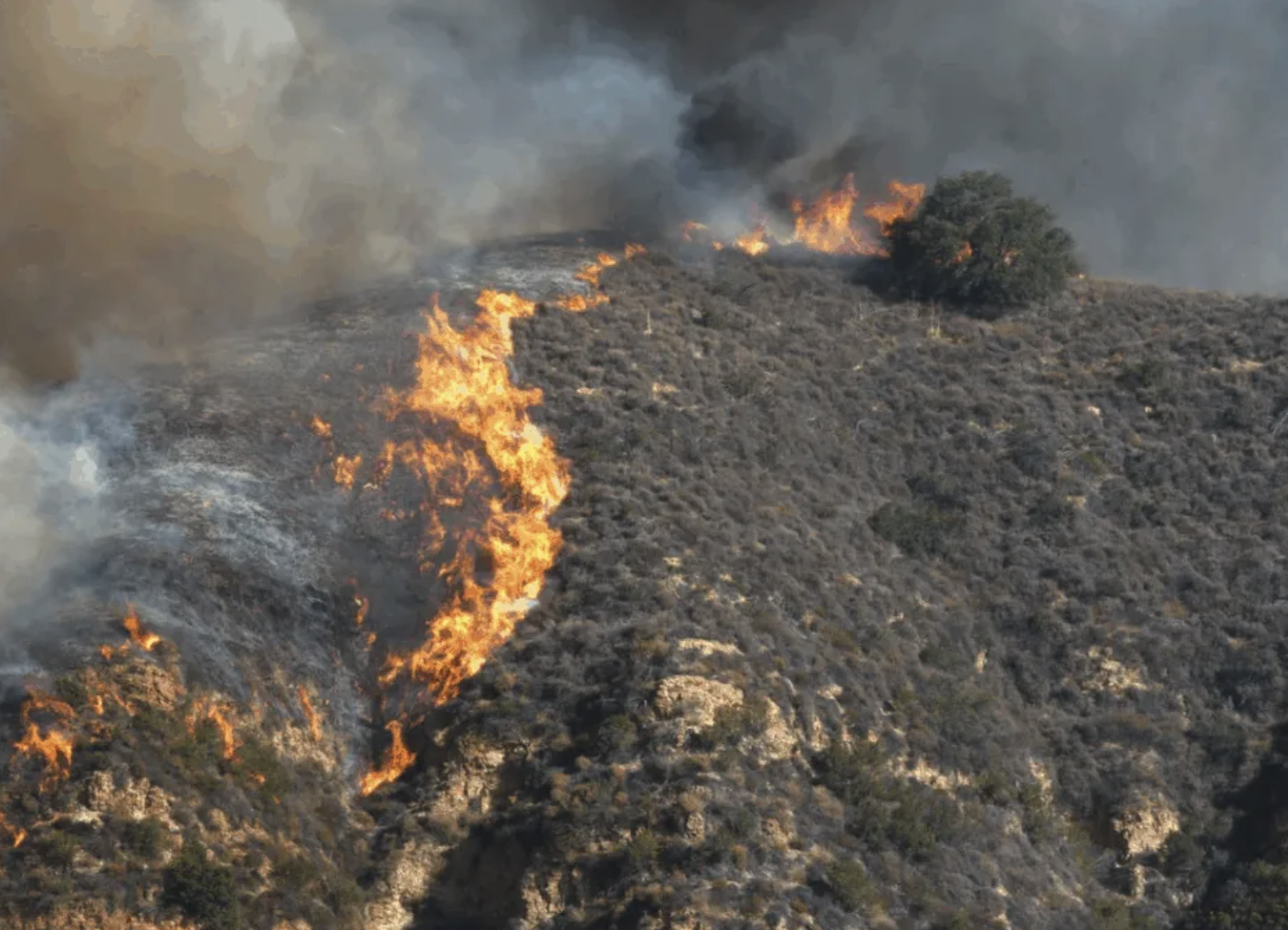
    Burning Urban and Wild Land Alike

    Learn More: Burning Urban and Wild Land Alike

  • A Giant Awakens: The July 29, 2025 Mw 8.8 Kamchatka Earthquake

    A Giant Awakens: The July 29, 2025 Mw 8.8 Kamchatka Earthquake

    On July 29, 2025, a massive magnitude 8.8 earthquake struck just offshore of the Kamchatka Peninsula in eastern Russia. The earthquake, which occurred at 7:24 a.m. local time, was one of the most powerful earthquakes worldwide in recent decades—comparable in scale to the 2011 Mw 9.1 Tohoku earthquake in Japan. This extraordinary event serves as…

    Learn More: A Giant Awakens: The July 29, 2025 Mw 8.8 Kamchatka Earthquake

  • Dave Jewitt Snaps Best Photo Yet of Interstellar Visitor

    Dave Jewitt Snaps Best Photo Yet of Interstellar Visitor

    Learn More: Dave Jewitt Snaps Best Photo Yet of Interstellar Visitor

  • NASA launches UCLA instrument into space to study effects of Sun’s magnetic field on Earth

    NASA launches UCLA instrument into space to study effects of Sun’s magnetic field on Earth


    Learn More: NASA launches UCLA instrument into space to study effects of Sun’s magnetic field on Earth

  • Scientists Reveal the Hairy Truth About Giant Ground Sloths

    Scientists Reveal the Hairy Truth About Giant Ground Sloths


    Learn More: Scientists Reveal the Hairy Truth About Giant Ground Sloths

  • 51 Pegasi b Fellowship in Planetary Astronomy at UCLA

    51 Pegasi b Fellowship in Planetary Astronomy at UCLA

    The Heising-Simons Foundation is accepting applications for their 51 Pegasi b Postdoctoral Fellowship program in Planetary Astronomy.  UCLA is one of the host institutions.  Applicants should apply directly to the Heising-Simons Foundation (www.51pegasib.org) in order to work with UCLA faculty in one or both of UCLA’s Departments of Earth, Planetary, and Space Sciences (epss.ucla.edu) and/or…

    Learn More: 51 Pegasi b Fellowship in Planetary Astronomy at UCLA

  • EPSS Researchers Featured on Kudos for Magnetic Field Simulation Study

    EPSS Researchers Featured on Kudos for Magnetic Field Simulation Study

    Researchers Hanying, Chris, and Yingdong recently had a paper published on magnetic fields, titled “Detailed Processes of Colliding Helical Magnetic Structures Explored Through Simulations.” Along with this, they are being promoted by the AIP Showcase on Kudos, which you can read here.
    Learn More: EPSS Researchers Featured on Kudos for Magnetic Field Simulation Study

  • 讣告:李京(1960–2025)

    讣告:李京(1960–2025)

    Learn More: 讣告:李京(1960–2025)

  • In Memoriam: Jing Li (1960-2025)

    In Memoriam: Jing Li (1960-2025)

    Learn More: In Memoriam: Jing Li (1960-2025)

  • Highlighting EPSS Graduate Student Awardees!

    Highlighting EPSS Graduate Student Awardees!

    EPSS wants to highlight our most recent grad awardees! Fall AGU 2024 Outstanding Student Presentation Award (OSPA). You can find them here! Emily Klonicki Sergei Kamaletdinov NSFGRFP, NSF Graduate Research Fellowship Eva Zlimen Miranda Chang 2024 IAU PhD Prize You can find him here! Zesen Huang UCLA Dissertation Year Fellowship Awardees Sergei Kamaletdinov Kyle Webster…

    Learn More: Highlighting EPSS Graduate Student Awardees!

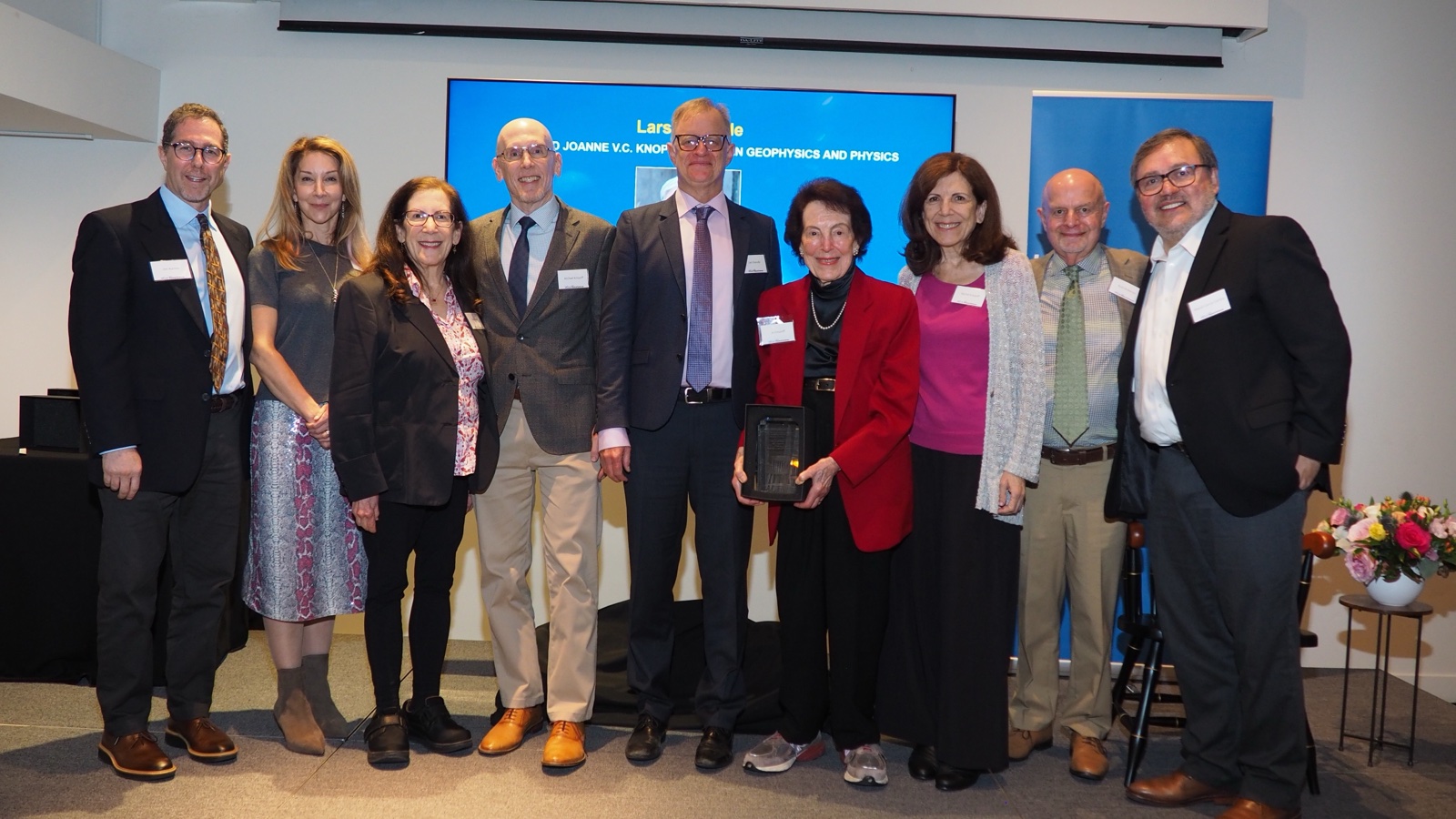
  • Professor Amy Mainzer, EPSS – Alumni Celebration 2026

    Professor Amy Mainzer, EPSS – Alumni Celebration 2026

    Learn More: Professor Amy Mainzer, EPSS – Alumni Celebration 2026

  • NASA Selects L-MAPS Instrument Led by Former Student Matt Siegler for Artemis Lunar Terrain Vehicle

    NASA Selects L-MAPS Instrument Led by Former Student Matt Siegler for Artemis Lunar Terrain Vehicle

    Learn More: NASA Selects L-MAPS Instrument Led by Former Student Matt Siegler for Artemis Lunar Terrain Vehicle

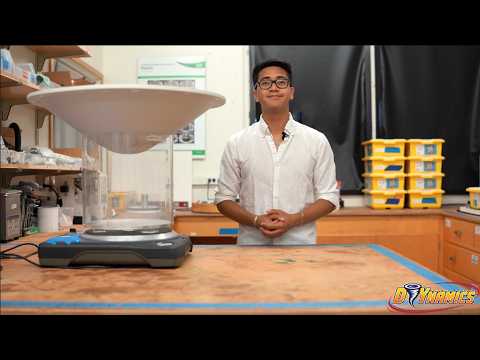
  • SpinLab Showcases Beautiful Bubble-Driven Tornados from DIYnamics Outreach Tables

    SpinLab Showcases Beautiful Bubble-Driven Tornados from DIYnamics Outreach Tables

    Learn More: SpinLab Showcases Beautiful Bubble-Driven Tornados from DIYnamics Outreach Tables

  • Igneous Petrology in the Field

    Igneous Petrology in the Field

    Professor Peng Ni’s hands-on class provides students with valuable experience This spring, students in the Igneous Petrology class participated in a four-day field excursion near Bishop, California, from May 22nd to May 25th, to develop practical skills in geological identification and process interpretation Led by Professor Peng Ni, the group was based at UCLA’s White…

    Learn More: Igneous Petrology in the Field

  • EPSS Research Solves a Decades-Old Mystery on How Electrons are Accelerated

    EPSS Research Solves a Decades-Old Mystery on How Electrons are Accelerated

    EPSS research done by Vassilis Angelopoulos and colleagues has solved a decades-old mystery on how electrons are accelerated to relativistic energies at plasma shock waves, in front of Earth’s bow shock, and by inference at other astrophysical settings. Click here to read the paper published in Nature Communications. Click here and scroll down to read…

    Learn More: EPSS Research Solves a Decades-Old Mystery on How Electrons are Accelerated

  • Jon Aurnou Named Department Chair of Earth, Planetary, and Space Sciences

    Jon Aurnou Named Department Chair of Earth, Planetary, and Space Sciences

    We are pleased to announce that Professor Jon Aurnou has been appointed the next Chair of the UCLA Department of Earth, Planetary, and Space Sciences (EPSS), effective July 1, 2025. Professor Aurnou joined the EPSS faculty in 2002 as an assistant professor and was promoted to full professor in 2014. A geophysicist whose work focuses…

    Learn More: Jon Aurnou Named Department Chair of Earth, Planetary, and Space Sciences

  • David Jewitt Studies on Halley Type Comets (HTCs) Published in Astronomical Journal

    David Jewitt Studies on Halley Type Comets (HTCs) Published in Astronomical Journal

    Most known comets come from either the Kuiper belt (beyond Neptune) or the Oort cloud (out towards the stars).  So-called Halley type comets (HTCs) are a very under-studied group intermediate between these populations. It is not clear if they are more similar to the Kuiper belt or the Oort cloud comets, and their origins remain…

    Learn More: David Jewitt Studies on Halley Type Comets (HTCs) Published in Astronomical Journal

  • Postdoctoral Scholar Zesen Huang is Recipient of 2024 IAU PhD Prize

    Postdoctoral Scholar Zesen Huang is Recipient of 2024 IAU PhD Prize

    Read More

    Learn More: Postdoctoral Scholar Zesen Huang is Recipient of 2024 IAU PhD Prize

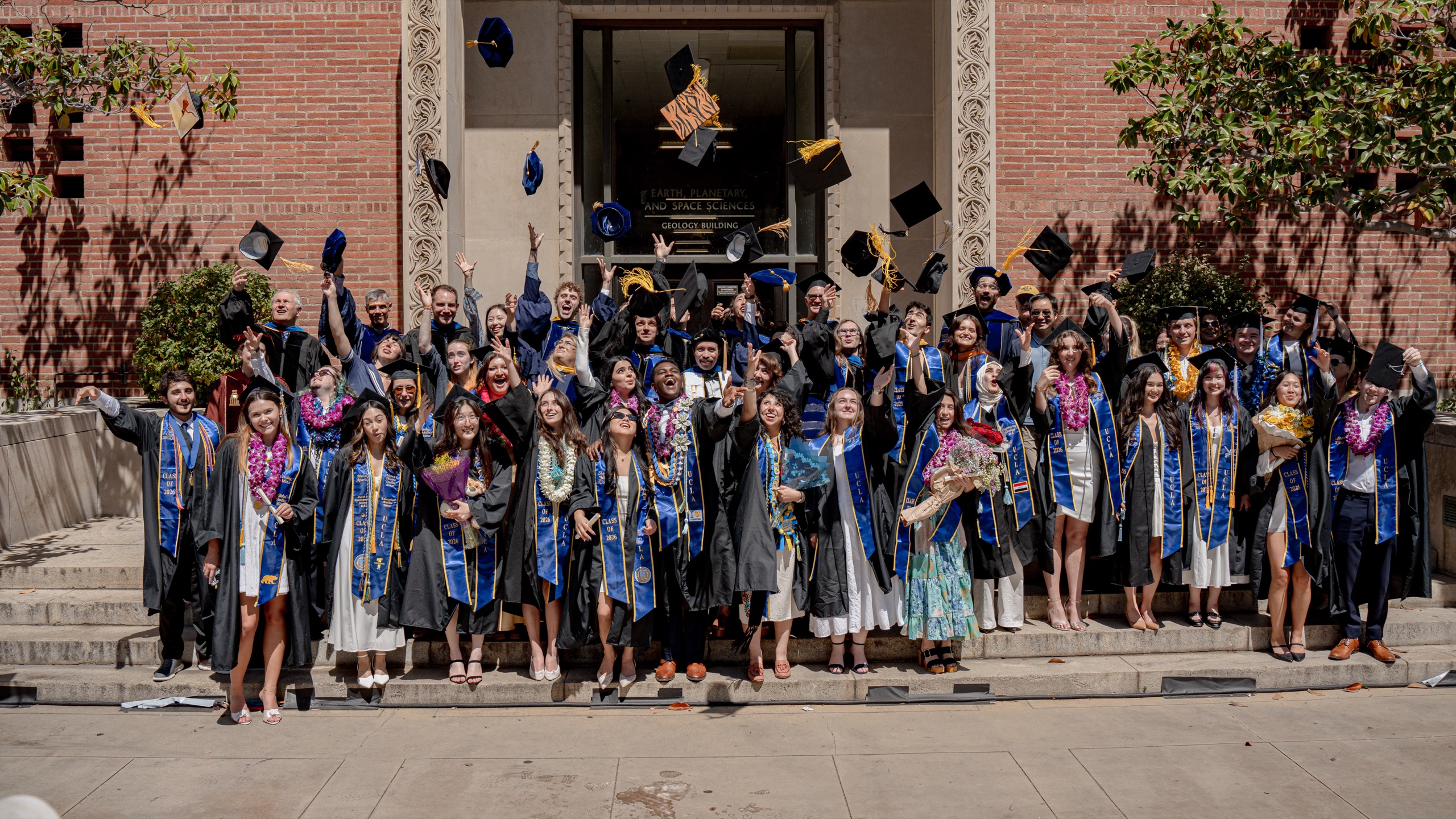
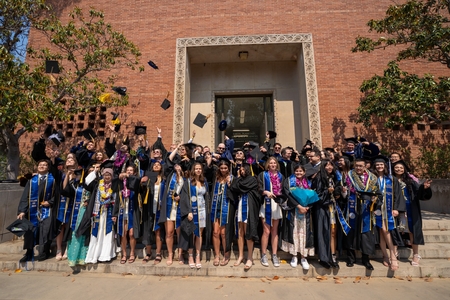
  • To our 2025 Earth, Planetary, and Space Sciences Scholars!

    To our 2025 Earth, Planetary, and Space Sciences Scholars!

    To our 2025 Earth, Planetary, and Space Sciences Scholars! To those who spent countless hours bent over microscopes, or hunched over map boards under the blazing sun.To those who decoded the secrets of chemistry, physics, geology, and engineering.To those who dared to look up— past the clouds, past the stratosphere— toward distant planets and the…

    Learn More: To our 2025 Earth, Planetary, and Space Sciences Scholars!

  • A future astronaut takes flight

    A future astronaut takes flight

    Learn More: A future astronaut takes flight

  • 2025 Commencement Celebration

    2025 Commencement Celebration

    Please continue to check this website for updates as we may have to make modifications. Join the Department of Earth, Planetary, and Space Sciences (EPSS) for our annual Commencement Ceremony honoring the accomplishments of graduating departmental students as they conclude this chapter of their academic journey. Tickets are required for those attending in person. Event…

    Learn More: 2025 Commencement Celebration

  • Francisco Spaulding-Astudillo and Jonathan Mitchell’s Congestus Cloud Research Highlighted by EOS

    Francisco Spaulding-Astudillo and Jonathan Mitchell’s Congestus Cloud Research Highlighted by EOS

    Learn More: Francisco Spaulding-Astudillo and Jonathan Mitchell’s Congestus Cloud Research Highlighted by EOS

  • Guggenheim Fellowship awarded to EPSS Chair Carolina Lithgow-Bertelloni!

    Guggenheim Fellowship awarded to EPSS Chair Carolina Lithgow-Bertelloni!

    Learn More: Guggenheim Fellowship awarded to EPSS Chair Carolina Lithgow-Bertelloni!

page not found

THIS IS THE SCHEDULE OF CLASSES PAGE